I was so focused on finally heading north that I forgot the April 1 announcement of DeLorme's new inReach SE, even though one standard step in getting Gizmo underway these days is firing up the original inReach for tracking, messaging, and much more (as discussed here last fall). But my forgetfulness does not indicate a lack of appreciation for the new model (which I've already handled briefly in prototype form). To the contrary, I think the SE (Screen Edition) will likely make a lot of boaters as enthusiastic about the whole inReach concept as I've already become...
What the heck? This morning In Myrtle Beach it was the same frosty 36 degrees as it was in Camden, Maine. I've got lots more install work I can do before heading north, but it's fun to check out the odd lot of early ICW cruisers who turn into Osprey Marina's narrow entrance channel. Particularly curious was this venerable Cape Dory 25 that came in looking like it had been knocking around at sea. In fact it had just come non-stop and single-handed from St. Augustine, Florida, and had gotten there mostly offshore from Cape May, New Jersey, just last month. Yes, in February, and the owner's previous sailing experience was aboard a Sunfish on a lake. I had to know more!
I really enjoyed being part of Trawler Fest last week. It was inspiring to meet relatively new cruising enthusiasts who are working to expand their skill sets, and trying to explain and demonstrate current technologies rekindled some of my own enthusiasms. I hadn't turned on the DeLorme inReach in months, for instance, but it located itself and paired with my iPad for easy backup navigation, tracking, and two-way messaging no problem, even though I was standing in front of an audience under a large aluminum-framed tent. Plus I got to see the entirely new User and Map Share web pages DeLorme recently developed for inReach, and they are sharp. However, I was also reminded of a disturbing behind-the-scenes patent issue that may hobble all SENDs (Satellite Emergency Notification Devices) and will likely tax consumers no matter what happens in court...
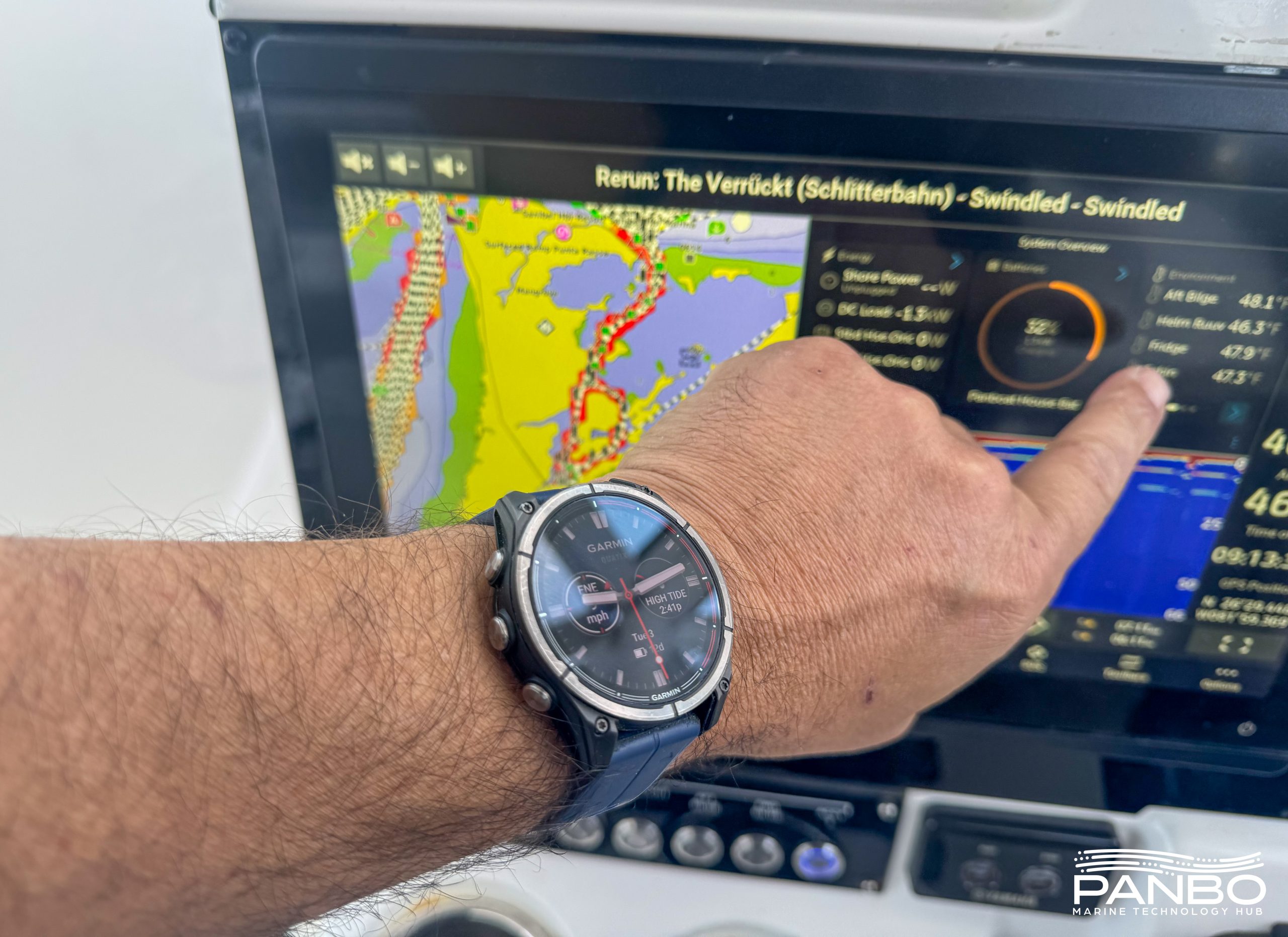
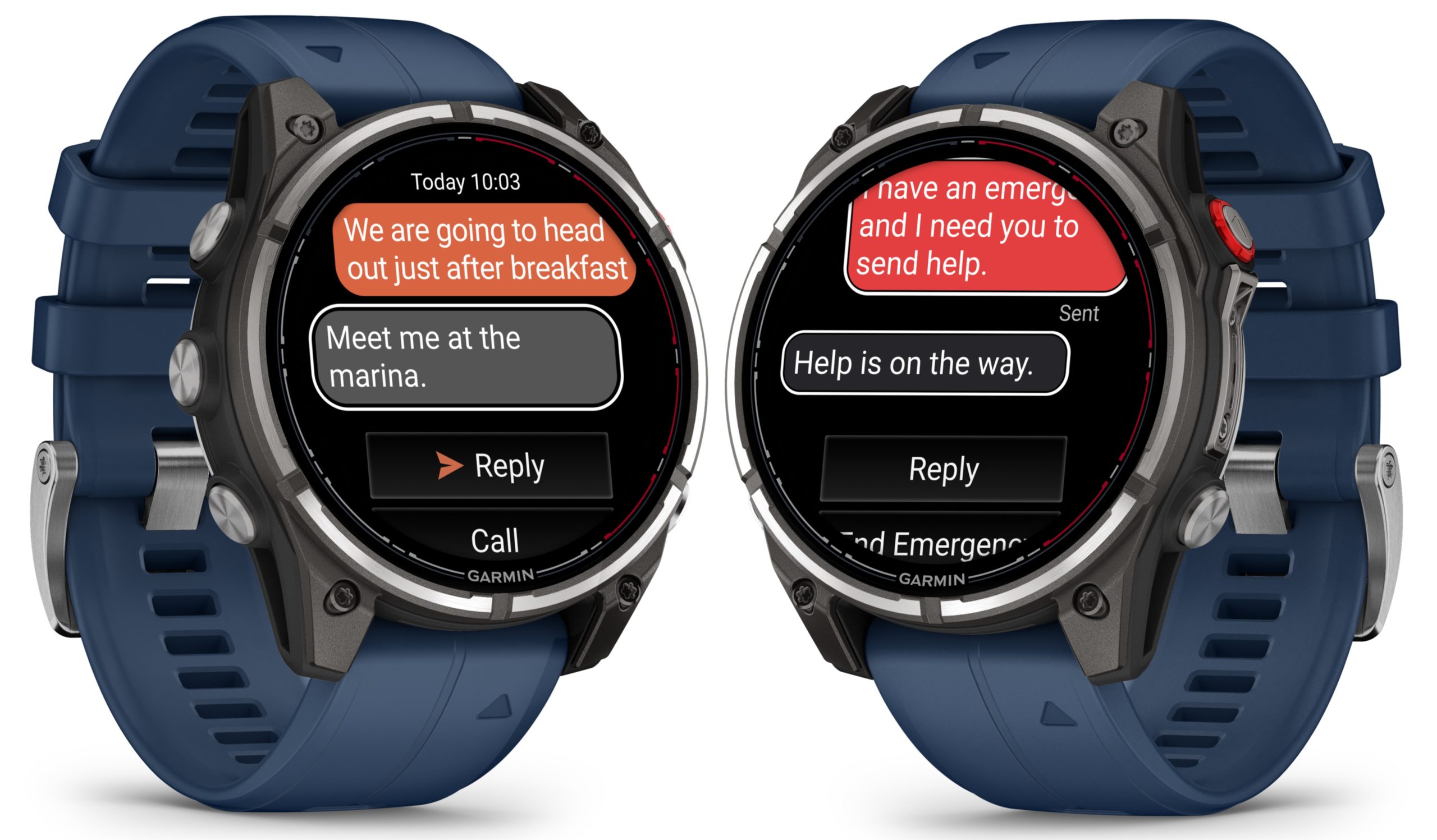
Holy Batman, the just-announced Garmin Quatix watch can connect wirelessly to a Garmin autopilot and not only show you what the AP is doing but let you steer the boat from your wrist. Plus if you fall overboard the lost wireless connection will set off an MOB alarm on a Garmin MFD and the AP will try to steer back to you. I hereby rescind my recent mumbling about Garmin's conservative approach to marine electronics! And aside from all the connectivity -- the Quatix can apparently interface with Garmin PC, Mac, and iPad apps too -- it seems like a heck of a boating watch even if you aren't running other Garmin gear...
No one should get overly upset quite yet, but it does seem that the U.S. Coast Guard is thinking about reducing the differential GPS (DGPS) correction stations it manages, and is also wondering if all the aids to navigation (AtoNs) it maintains are truly necessary these days. My friend Dean Travis Clark recently joined the Navigation Safety Advisory Council (NAVSAC) and he just sent around two of its working group resolutions for comments. I know he'd like to hear the opinions of Panbo readers too, and that these resolutions have not yet been finalized or presented to the USCG...
The Ocean Signal RescueMe PLB introduced this morning at METS is not just a little smaller than the competition; it's purportedly 30% smaller in volume and that claim seems borne out by the photo. Size is important because the smaller a distress beacon is the more likely it is that the owner will have it with him or her when it's actually needed. Of course when things go wrong a PLB has got to work well too, even if it's years old, and the RescueMe also looks good in those terms...
It's telling of the Great Convergence when the biggest electronics news of a boat show is arguably a software upgrade. I don't mean that innovation in marine electronics has slowed down, not at all. But whereas the Big Four have now all rationalized and modernized their product lines -- though in some cases it took painful operating system rebuilds -- big features can often be realized just by unleashing capabilities already build into MFDs or available from sensors that may already be interfaced. We just saw two neat new Fusion 700 audio interface updates, but now consider all the features crammed into Raymarine's Lighthouse v5 update, which was just announced the first day of FLIBS and -- holy cow -- is already available for all a-, c-, and e-Series MFDs...
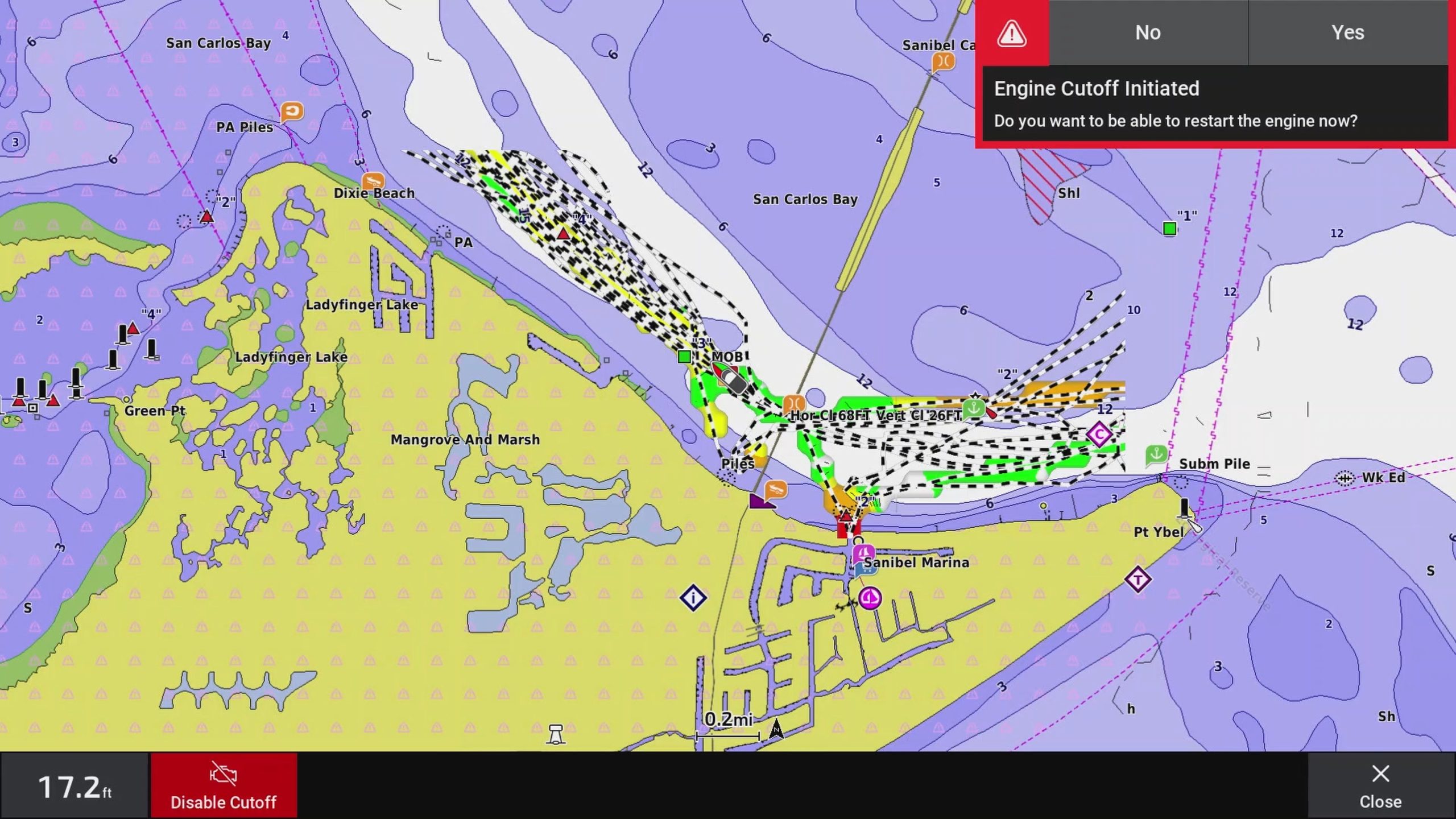
I think that personal AIS beacons are a deservedly hot new safety technology but, as discussed in June, the display manufacturers are just learning how to handle them well. In fact, right around that same time I had to add bug alert comments to an earlier Kannad R10 AIS MoB beacon entry about how a certain Garmin software update could cause its MFDs to shut down after receiving the beacon's test signal! It was an embarrassing moment in product improvement, as documented in these email warnings to the Newport-Bermuda race fleet, but Garmin eventually solved the issue and may indeed have set a new bar for the proper integration of AIS beacons. The screen above, for instance, shows how clearly the Garmin 7212 on Gizmo alarmed shortly after I activated the test mode on a Kannad R10...
A Camden Harbor 2012 spring bonus has been getting to know that classy 85-foot wooden yawl as she prepared for an attempt at the Northwest Passage. Her name is Nordwind though her mainsail cover and life rings are marked Nordwind 1939, presumably in memory of both her launch year and the Fastnet Race in which she set a record that held for twenty-four years. Some of this history can be found on Nordwind's 2011 Transatlantic Race page along with mention of her recent rounding of Cape Horn. This old boat still gets around! I suspect that her greatest asset for the adventure north is the fact that her professional skipper, Alex Veccia, has already sailed her so many hard miles. But if you look closely in her rigging, you'll see that he will have some new electronic helpers...
One of the great things about the new AIS MoB beacons, like the recently FCC-approved Kannad SafeLink R10, is that they can send a short test signal over the air so that you can see how well your AIS plotter has been programmed to deal with one. But the fact that I've been encouraging folks to do just that makes it even more imperative that I report on a bug in very recent Garmin MFD software versions 7.30 7.20, 4.30 4.20, and 3.80 3.70. (See comments on the R10 entry above for more detail, but you probably don't have the bug unless you updated your Garmin in last few weeks). While Garmin purportedly did a great job of programming its displays to respond usefully to an AIS MoB, apparently the test signal from an R10 can cause its MFDs to shut down, which was just discovered in Newport where the Bermuda Race fleet is gathering...