
Panbo

Category: History

User generated marine content, 1858 style!

Mar 19, 2008

Waterspout_1858_Mercantile_Marine_Magazine

That’s not just an old drawing, it’s a sketch submitted to Mercantile Marine Magazine in 1858 by the chief mate of the ship Forerunner, and it’s accompanied by a detailed description of the spout (height of foam at base: 50’), the Southern Ocean conditions that produced it, and how Forerunner got out of its way! Mate Fletcher’s goal, of course, was to help fellow sailors understand water spouts better, and maybe brag a bit. I came across this bit of history in the most modern and wonderful way. I was Googling the name of a certain European lighthouse that might appear in one of PMY’s photo/chart contests, and one link I got was to the Google Books version of MM Magazine’s 1858 bound edition. And, mercy be, all 384 pages are searchable, downloadable, and fascinating.

Continue Reading

State of the art, 25 years ago

Dec 26, 2007

Civais_Nav_Station_c_Penobscot_Marine_Museum_Boutilier_Collection_

To heck with all the 2007 “best of…” lists, let’s reminisce. It’s 1984, the 47’ sloop Civais has just joined the list of new builds at the Paul Luke yard in Boothbay, Maine, and she’s sporting about as spiffy an electronics package as I recall from the era. Check the bigger picture here. That’s an International Offshore digital depth sounder and alarm at upper left, a back up perhaps to the Raytheon combination flasher and recording fathometer at the upper right. There’s also a Furuno CRT radar, with hood, just above the Trimble Navigation Loran C unit. Stacked just to their right, starting at the top, is a Stephens Engineering AM/SS radio telephone, a Magnovox satellite navigator (Transit, not GPS), and some sort of VHF radio (can’t make out the brand). Finally there’s weather fax (Alden?) and some sort of box that might be an antenna switch or tuner. And I dare say there are some spiffy old instruments in the cockpit. I doubt that any one piece of gear talks to any other, via NMEA 0183, 2000, Ethernet, or any other protocol. The good old days? Nah, but easier to get your installer head around. This photo is another from the great Red Boutilier Collection, courtesy of the Penobscot Marine Museum. More can enjoyed at MaineBoats.com. Reminisce!

PS On the book shelf is one of the better—and certainly the most humorous—star finding books I know, The Stars: A New Way to See Them by H. A. Rey (yes, the same man who created Curious George). And it’s still available.

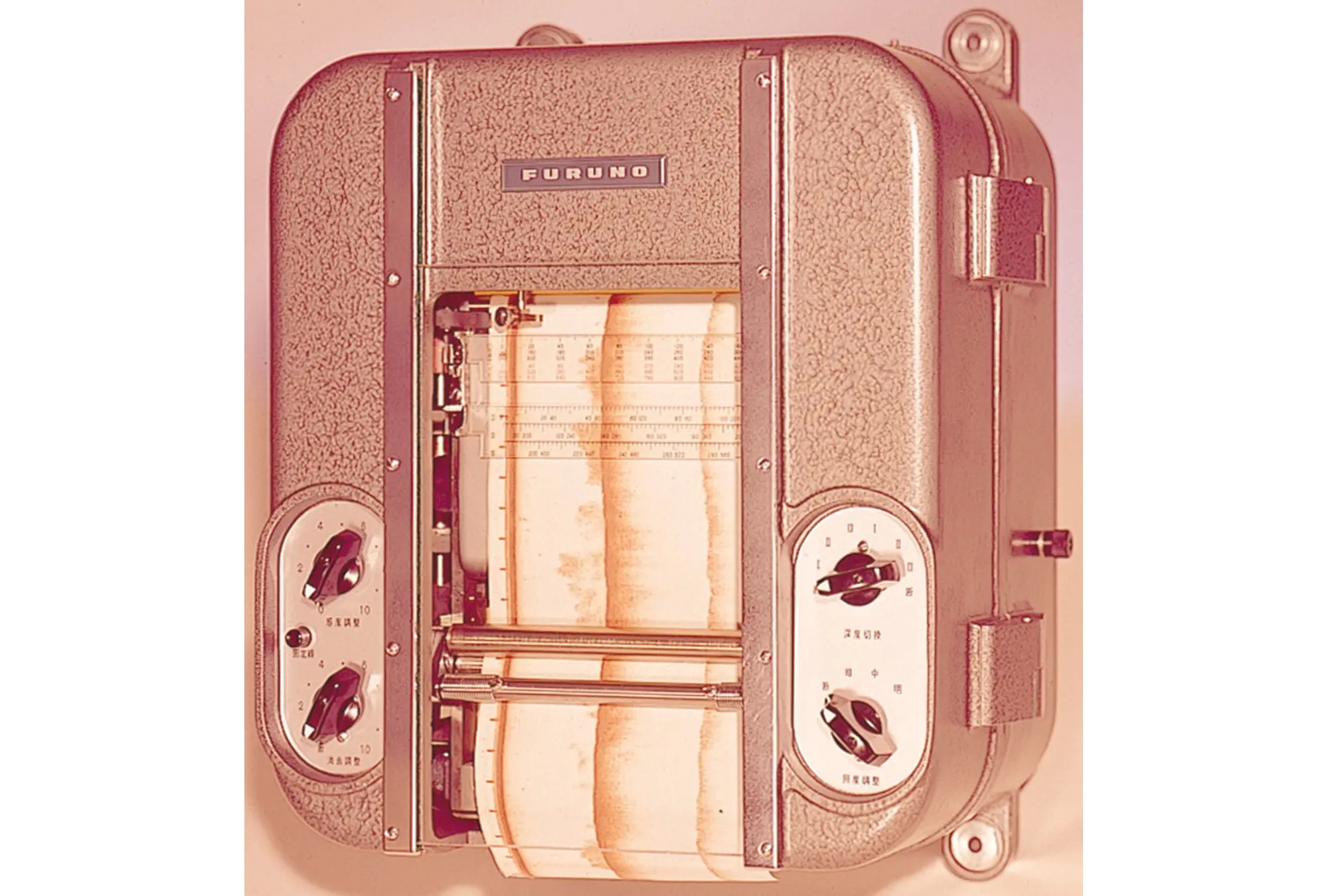
Najade, lovin the old Furuno

Jun 5, 2007

Najad helm

My buddy CharterWave Kim took these shots at an Italian charter boat show, and I thank her for passing them to Panbo. Najade’s dishwasher-size radar is an oldish 1965 Furuno FR2010, which apparently still works fine…at least after its three minute warm up. Furuno may even still have parts (tubes!?) for it. That’s a Furuno policy that many owners appreciate almost as much as the performance. I mention it because I was bit shocked last week to see a Raymarine customer note stating that they are “sorry to say but we can no longer repair or provide parts for the ST 80 system.” Which seemed pretty harsh, as the customer says he installed his ST 80 instruments new in 2001.

Najade_radar_crop

RFU w/ RDF, so bad we missed Cape Cod

May 11, 2007

MonheganCCC_RFU

The mother hen of sailing blogs, Proper Course, is running an interesting project. Tillerman is inviting other bloggers to post entries about their worst sailing mistake, which he’s link to, creating a sort of master list of disasters. Well, yours truly firmly believes in the value of learning from the mistakes of others, and has made so many his own self that he’s hard put to pick a “worst.” Maybe this one; even though it took place a very long time ago, I remember one moment in the following true tale as though it were yesterday—shiver me timbers—and am fairly certain that I’ve been a better navigator ever since:

I believe it was sometime in October, 1972,

Continue Reading

Boutilier Collection, a PMM gem

Apr 20, 2007

PMM_Boutilier_AboardDELCA

It’s amusing how my little neighborhood on the back side of Camden—once the home of those who manned mills powered by the Megunticook River, and hence called Millville—is now home to some weirdly modern worker bees. While I’m plugging away at Panbo World Headquarters, a good neighbor, Peter Lindquist, is around the corner scanning and cataloging an enormous collection of marine photographs taken by a character named Red Boutilier back in the 60’s and 70’s (when the mills were winding down). The collection belongs to the Penobscot Marine Museum, where it will be part of this summer’s feature exhibit: “Through the Photographer's Lens: Penobscot Bay and Beyond.” 
  This particular shot shows a man aboard the sardine carrier Delca making a call on what I think is an early VHF (?). A typed note in the negative box states that the 78’ Delca was built in 1936 as a minesweeper, then rigged over when the Port Clyde Packing Company bought her after WWII. Then she “worked steady until she sunk on Sept. 7, 1989, 1 mile northeast of Old Cilley Ledge Bell. She was loaded with 1,418 bushels of herring when she went down {due to losing a plank}. Capt. Peter Grew {perhaps above} and mate Dennis Tupper were rescued by the crew of the F/V Diane and James.”

New England Wireless and Steam Museum, a must visit

Jan 25, 2007

Nancy n Bob Merriam at NEWSM

Monday I had the great pleasure of touring the New England Wireless and Steam Museum with two of its founders, Nancy and Bob Merriam. I got there by tagging along with Jim Fullilove, editor of NMEA’s Marine Electronics Journal, and he was there to work on a story for the organization’s upcoming 50th anniversary. You see, Nancy and Bob were two of the dealer/installers who formed NMEA way back when. Hence the table full of early RDFs, AM radios, fathometers, and radars they’d pulled up from the Museum’s basement. The Merriams are a deep well of knowledge about that gear, and the early NMEA, but their real passion is the very dawn of marine electronics a century ago, and the museum reflects that. Below, for instance, is the very first wireless communications station—building and all, and in operational condition. Check the giant Morse key, capable of handling 20kw without a relay. What you can’t see in this photo is the intense blue sparks generated by the Massie spark transmitter upper left.  The museum—which has all sorts of other early wireless artifacts, not to mention a major collection of working steam engines— is only open by appointment and best visited during the warmer months, but very much worth doing. Meanwhile this novice “sparkie” is very much sparkless, down with the flu while visiting New York City, and regular posts may not resume until next week.

Ben the sparkie

Merry Christmas, and a heavy weather how-to

Dec 24, 2006

Hope_for_the_best_painting_cPanbo lr

I think of this painting—one of an ancient series hanging in the Venice, Italy, Maritime Museum (and bigger here)—as a how-to for sailors caught out in a storm: Put out all your anchors, jettison heavy objects (like cannons), pray to your personal savior, and hope for the best!  Here in Maine we’re trying not to get upset about the freakish fact that the ground hasn’t frozen yet (and I’m thankful that we live some 180’ above sea level). But I trust that whatever happens is all in God’s plan, and I wish you all a very fine Christmas, or Chrismakka as we call it in our home, or however you honor this grand turning of the seasons.

Sailor Receiver/RDF, elephant proof

Sep 11, 2006

Sailor Radio Gary Wood Panbo

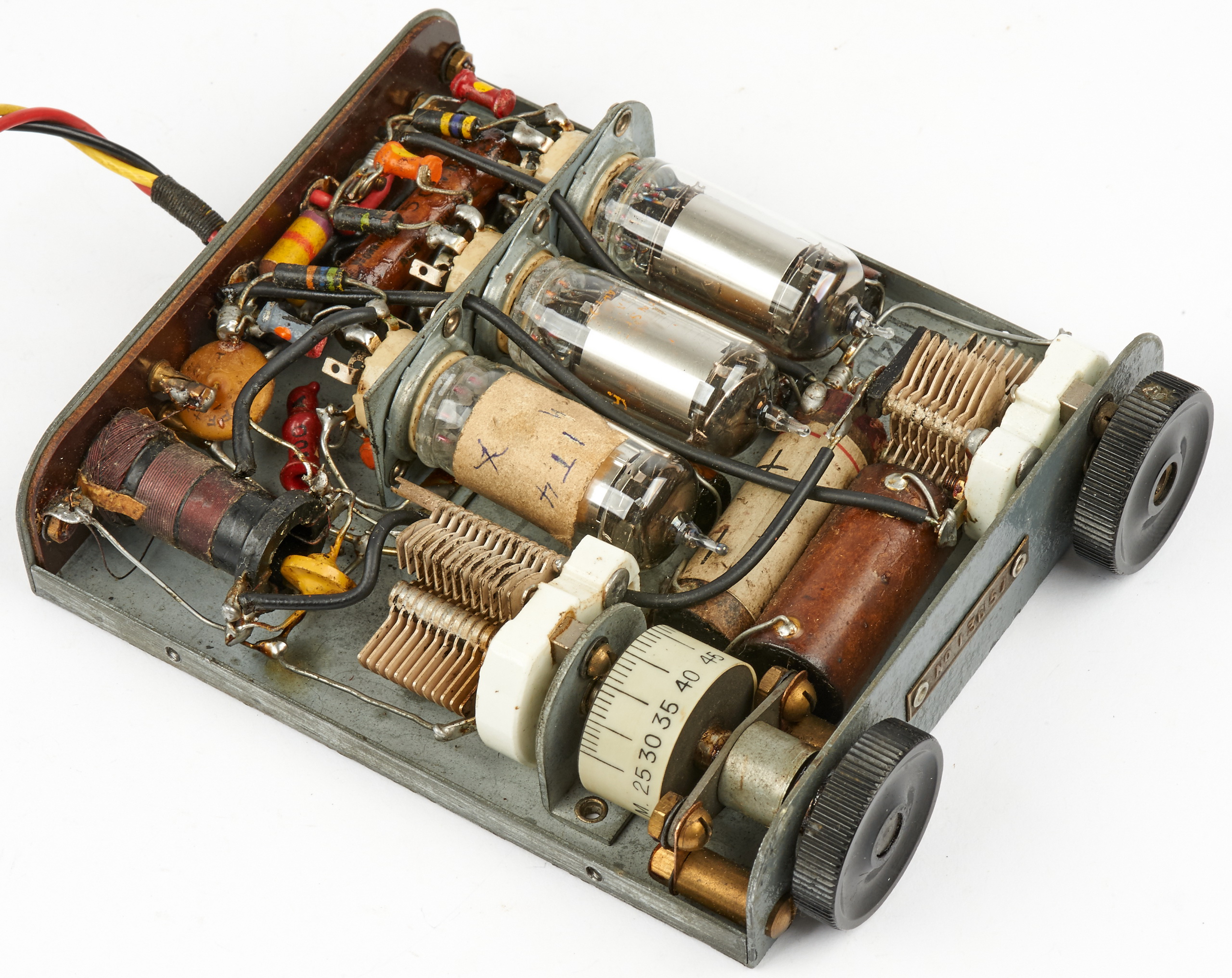
On a day when it’s hard to avoid heavy memories of 9/11/2001, it’s a bit of relief to go back much further. I remember these bullet proof Sailor receiver/RDF sets from some of the higher end sailboats I delivered in the 80’s. This particular unit belongs to panbote Gary Wood who was kind enough to answer my call for old electronics and to haul this knobby beauty out of his garage and photograph it, bigger here, with Puget Sound in the background. He’s had it for awhile, having:

“…bought it new for installation on our Wauquiez Hood 38, delivered in France in 1981.  At that time, RDF was state of the art technology.  Sat Nav hadn’t arrived, and Loran-C did not yet work in the English Channel and North Sea.  I used it to find Heligoland in the middle of the night, an island in the North Sea about 40 miles from Cuxhaven, Germany.  Other than that, it was great for listening to the BBC and to hear, but not talk to, SSB communications.  We were in the Mediterranean a year later, and bought a Si-Tex Loran C.  It was the size of a large loaf of bread, and it cost $1,500.  But we knew where we were all the time!  GPS has certainly changed all of this.”

Gary also reminded me that the 80’s ads for this radio featured an elephant standing on it. Rugged! The Sailor brand is still around, incidentally, but now, as part of Thrane & Thrane, the gear is pretty much solely focused on commercial ships.

PS. The comments reveal that some Panbo young’uns are baffled by the gray gadget at left in the picture (top down view below). Pardon me for not explaining better! Kids, it’s a hand bearing magnetic compass—hence the dampening fluid (which it needs desperately) requirements—with the Sailor’s directional antenna and remote controls attached. The odd doodad at the top is a mirrored magnifying prism so you could read the compass card as you swung the whole device at arm’s length, seeking the maximum signal from a radio beacon (probably through earphones). Or you could just use it like a regular, if bulky, hand bearing compass without RDF turned on. 

Sailor RDF Sestrel

Marine Electronics 1985, please show me your old stuff

Sep 7, 2006

Old Electronics

I’m thinking of writing my year-end Power & Motoryacht column about the state of marine electronics when the magazine first published in 1985. That also seems to be the birth year of the chart plotter. I think it will be fun to look at the generally boxy and complicated—not to mention low performance and high priced—machines we struggled with back then. I hope anyone with pictures, manuals, or just memories will share them with me, particularly the electronics companies that were in business back then and have piles of gear like the above (bigger here) gathering dust somewhere (hello Raymarine/Raytheon/AutoHelm/Apelco etc.).

I have a copy of that first February 1985 PMY, and am especially interested in the stories behind those first electronics advertisements: the  Raytheon 1200 Pathfinder radar, Trimble 200 Loran, Tracor Global Navigation System (“worldwide navigation for under $7,500”!), Alden Weather Fax, ITT Jabsco night vision, Standard Horizon VHFs, Cybernet marine stereo, Cetec Benmar autopilots, Sea-Tex everything (“radars, chart recorders, Loran C receivers, autopilots, track plotters, color sounders, ADF’s, the works.”), and, finally, RDI radar watch, sat nav, and sat com…yes, they claimed “Telephone, Telex, Computer Data, and Slow Scan TV” (whatever that is). Did this stuff work and what happened to the companies involved? Were you using marine electronics in 1985?

Super Cheater, do they make 'em like they used to?

May 30, 2006

Audacity Super Cheater copyright Panbo

Would you be surprised to learn that Audacity's electronics are minimal? Actually just a venerable Garmin 48  at the chart table and this fabulous Aqua Meter Super Cheater Tournament depth flasher in the aft companionway (bigger here). I had a flasher like this in the 70’s and they work darn well. Like an analog watch, it only takes a few brain cycles to keep track of depth on that big round dial (15 feet in this case). Plus it’s simple as pie; left button switches between the two ranges, right button controls gain and on/off. But it’s hard to see fish on these things and darn funny to think of one as a fisherman’s “Tournament Super Cheater”, but then again the similar Lowrance’s famous Fish-Lo-K-Tor was a million seller. Actually, there’s at least one company, Vexilar, still making flashers, though they look a little more sophisticated than this.

Lowrance's Fish-Lo-K-Tor, the good old days?

Mar 13, 2006

Lowrance 60s with flasher 1

It’s going to be short today, as these pictures speak for themselves. They probably date from the early 60’s, though even Lowrance (who provided them) doesn’t seem sure. But that’s about when the company’s portable flasher—wonderfully named the Fish-Lo-K-Tor, and also known as the Little Green Box—really took off. According to Lowrance history, it eventually sold a million units! None of us, manufacturers included, pay much attention to the old stuff as technology hurtles forward, but I’m starting to get nostalgic about gear like this. I wonder if there are collectors?

Lowrance Fish-Lo-K-Tor

The first chart plotter, 1985 & Italian

Dec 30, 2005

DatamarineChartLink

C-Map owns this ‘historic’ machine, which is supposedly the first chart plotter (bigger here) ever sold in the U.S. That was around 1985, when Navionics founders Giuseppe Carnevali and Fosco Bianchetti developed the first crude vector charts and this Datamarine-labeled plotter to show them. (Bianchetti soon went off to found C-Map). Wasn’t it about 5 years later that the first PC charting program came out? At any rate, we’ve come a hell of long ways in 20 years, and Carnevali and Bianchetti—who still run their companies—deserve some of the credit.

Now, would anyone care to predict what marine electronics will look like in another 20 years? 10? 5? With that, I wish you all a wonderful new year.

Weekend special, what the heck?

Sep 17, 2005

What the hell

I was just looking for compass stuff in some nautical clip art I have (we used it a lot when I edited Reed’s). I came across this image and must say I don’t know for sure what this fellow is up to. I see what seem to be a telescope on what may be a pelorus, an earphone, a microphone, a booklet, and maybe a control box with cables or tubing headed off somewhere. What is this gent doing?

Hurricane warnings, oldee style

Aug 26, 2005

 Oldtime

Hurricane Katrina whacked south Florida fairly hard yesterday and now it looks likely that she’ll power up and smack the northwest section of the state early next week. Per usual, there’s an extraordinary amount of data and valuable prediction information at the National Hurricane Center’s web site. Hurricanes are truly meteorological loose cannon, but it is amazing how far our ability to forecast them has advanced. I got to tour the NHC facility in Miami in early 2004 and was bowled over by the high levels of technology, data i/o, and brain power. That was the year that NHC’s back testing program indicated that their forecasting was good enough to begin issuing 5 day track predictions, which have no doubt saved lives and property since. By contrast, observe above how hurricane warnings were delivered to sponge boats off St. Pete, Florida, in 1938 (from NOAA’s online photo library).

Now, no idiot U.S. Senator (carrying water for a few private weather companies) is going to stop NOAA from distributing hurricane information, but, as you likely know, Senator Santorum of Pennsylvania does have a bill in process that might severely limit its ability to share less critical information. BoatU.S. has just posted a good editorial on the issue. Following one of its links, I found and used an easy e-mail form to register opposition to the bill with my senators. Why don’t you? 

Update, 8/28: Naturally I’m curious if Katrina could reach Maine with any force, and I now see that the NHC has a new series of ‘experimental’ wind graphics that are quite valuable. This one shows me that the models now predict a 5–10% probability of over 50 knot winds on Thursday. Hmmmmm. Note that it can be animated if you click on ‘loop’.

Topophone, who's the geek now?

Jun 9, 2005

TopoPhoneLogo

I joke about my often over-the-top test boat, but check this guy out! While the topophone looks like a sensible idea for improving our natural stereo audio reception (i.e., ears) so as to get better bearings on ship horns and buoy gongs in the fog, it must have freaked the passengers a bit. The image is the logo of a small company that’s developed a topo mapping application for Smart Phones. It appears to have some interesting features, like to ability to send/plot positions via SMS, but it also has a tough competitor in Maptech’s Outdoor Navigator.

Download high res historic charts

May 2, 2005

Miami1921OK, I’m obsessed with charts, but I’m not the only navigator thus afflicted. Last week I used a snippet of a wonderful 1685 chart that’s available on the Net, and promised to tell more. The source is the U.S. Library of Congress Map Collection. The LOC has scanned scads of cartography at very high resolution for your viewing and downloading pleasure. You’ll see several categories, none of them “nautical charts” per se, but you’ll find all sorts once you dive into the search engine. Shown here, and larger here, is a bit of a 1921 chart of Miami. It’s interesting as an early example of color use, and also because it shows a Miami Harbor that’s damn shallow and missing some major features like Fisher Island and the whole cruise ship dock area.

You can zoom into the detail of these charts nicely on the LOC site, especially if you have a fast Web connection, but there’s a problem if you want to download one for further perusal or printing. Many are in an unusual format called MrSID that no standard graphic program I know of can read. The solution is IrfanView, an excellent freeware (or “beggar ware”) program created by a young Bosnian named  Irfan Skiljan. IrganView can turn this 6.6 meg .sid file of Miami into a 90 meg .jpg file that would print nicely full size. The LOC offers some maps and charts for areas outside the U.S., but if there are richer sources I'd sure like to hear about them.