The screen shot above could be from a "game" called Ship Simulator 2008, which in itself is pretty neat. (First I tried the demo, and then 17 Euros and a 705mb download later, I owned the darn thing ;-). But, in fact, the screen came from Raymarine Marketing Manager Jim McGowan who is using a beta copy of Ship Sim Pro 2.0, which among many other enhancements supports up to 8 serial ports that can send 23 NMEA 0183 output sentences and understand
9 input sentences. Thus McGowan can set up training or demo scenarios where what's happening in the simulation is also happening on his electronics. Thus the tug and barge being overtaken in New York Harbor above is also seen via AIS on the E-120 below...
Airmar's new H2183 heading sensor is motion compensated every which way; i.e. it's a 3-axis solid-state compass integrated with a 3-axis accelerometer and a 3-axis rate gyro. That's news both in terms of real world compass precision and the masthead performance of Airmar's PB200 Weather Station, whose gyro only senses yaw. In fact, while Airmar is pleased with the how well the PB200 seems to work on Dan Corcoran's sailboat, it may not promote the Weather Station to sailors until it can produce a model that incorporates the 3-axis gyro. But the H2183 is shipping now, for about $700 retail, and Airmar claims that its accuracy in "dynamic conditions" --- i.e. on a boat in a seaway --- is "best in class." And it's backing up the claim with the side-by-side testing video snapped above. While the "competitor" compass is not clearly identified, it's almost undoubtedly Maretron's well regarded SC200. The performance gauntlet is slapped down! And if Maretron or Simrad or whoever has a rebuttal, Panbo is ready to run it.
Try as I might, my photograph (click it for bigger) still fails to truly illustrate how sharp and color rich this sample of Raymarine's new A-Series actually is. I haven't yet subjected it to bright sunlight, which may mute the goodness considerably (hey, we've got two feet of snow on the ground here, people, and the snow banks chest high!). But I did bench test it for a couple of hours yesterday, which included feeding it large quantities of NMEA 2000 data (via an STng-to-standard-N2K patch cable). The A57d did well. The well developed C- and E-Series feature/interface set seems to be all here --- V4 update included (and radar excluded) --- if in miniature. Notice, for instance, the COG, Heading, Tide, and Wind arrows around the boat icon. I wouldn't normally use them all at once, but I've always found these graphics useful, given accurate sensors (and wondered why other manufacturers didn't steal them)...
Hey, look at the menu bar up to the right: now there's a Forum link, and it works! Of course there's hardly anything there yet, and I'm still struggling with the issue of categories, but the possibilities are terrific...
Finally got back in the lab on Friday, and it was a real pleasure to hook up the new Garmin wind whirly. I'll start, though, with my main complaint so far, which is the mast mounting scheme. The photo above compares it to the only other NMEA 2000 mechanical wind sensor I know of, Simrad's IS20 SimNet Wind Vane. Note how the Simrad has separate base plate that typically gets screwed permanently to the mast head. The vane itself clicks in like a boot into a ski binding, and the cable connection is simply a snap-in SimNet plug with a built-in retainer wire. A guy on a bosun's chair could remove or replace this vane with one hand, no problem. The Simrad vane cable, incidentally, contains a backbone terminator because vanes are almost always too far--i.e. more than 6 meters--from a backbone to be just dropped in. By contrast, the Garmin vane base gets fastened direct to the masthead, period, and then you have to deal with that N2K tee-like piece, which is actually an inline terminator. (Or use a Maretron inline terminator, which is sleeker.) But while the mounting is inelegant, there is much to like about the Garmin's GWS 10...
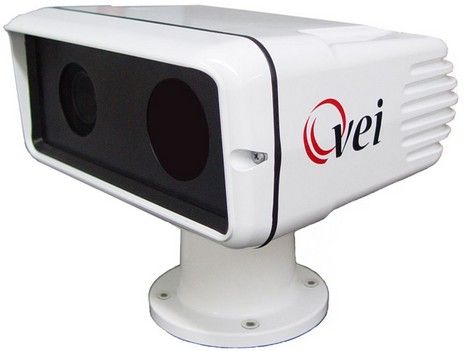
A major press event in Miami was FLIR’s on water demo of its neat new mid-priced M-Series dual camera system, which I’ll cover soon. But first I’ll discuss the recent efforts of two FLIR competitors to make enhanced vision more “affordable”. Above is VEI’s OceanView Apollo II, which features a 320 x 240 pixel thermal camera and a 570 line “ultra low light” cam (0.00015 Lux!). The zoom is only 2x digital, but it tilts (internally) 26 degrees, pans 360 continuous, and comes with a controller that has a 4 line LCD to help with initial aiming and set up menus. It retails for $12,995, which is pretty darn reasonable for thermal vision, but…
Fast Find PLB breakthrough, and SPOT/BoatUS team-up
Feb 18, 2009
Smaller, better, cheaper! McMurdo's new Fast Find 210 PLB is just a bit over four inches long (my model has small hands), but features not only a 50 channel GPS but also an SOS flashing LED. And it will probably retail for under $300. I say probably because it is not yet FCC approved, therefore not yet for sale, and McMurdo's US distributor Revere Supply is hence reluctant to quote prices. But I've heard the breakthrough $299 price from several sources, including PLB maven Doug Ritter, who's put up some good comparative dope. Remember that ACR also has new PLBs in the works and both companies are now also clearly competing with SPOT. I think we've got us a good-for-consumers product battle going on!
Either XM or Sirius Weather and Audio is now available on nearly all major MFD brands. Above is Sirius seen on the new Lowrance HDS during the Broadband Radar demos. The implementation looked very good (as did the whole HDS package, more on that soon), but in truth all the satellite weather implementations seem to be getting better. I spoke with both XM and Sirius representatives at the Boat Show and their message was that they really are working together now--they are just two divisions of the same company--and that they weren't too worried about the wild battle of the media moguls that had put their company high on the business news page...
I got aboard a demo of the new Raymarine C-Series Widescreens last week and was fairly impressed. While I don't really care that these 16 x 9 aspect ratio screens are "theater like", I do believe in getting the biggest display possible, and this format helps, because the fit-onto-helm constraint is usually vertical. (You can see demo boat helm here.) The format also seems to work well with some styles of split screen navigation, as I attempted to illustrate above. If I'd had more time I'd have put both chart and radar in look-ahead modes, and set the soft key menu to auto hide. Note that the screen, at 1280 x 800 pixels, looks sharper than my photo shows, but is purportedly still about as bright as the existing C-Series. Raymarine has tons on the new MFDs here, and I have some niggles below...
Miami International Boat Show, recession ruminations
Feb 16, 2009
I jetted away from the Miami Boat Show (on a half-empty plane!) with loads of coming Panbo electronics material, but first I'll discuss the behind-the-booth question of the show: How bad will 2009 be? Attendance numbers aren't available yet (update: 28% off), but the aisles often seemed emptier than usual, and the Miami Herald reported way low hotel occupancy. Note, though, that the Shelburne sales guy quoted there has bigger problems than the recession, to which I can personally attest...

It's a lousy photo (even clicked larger), but amazing once you understand it. Notice the piling somewhat hidden behind Navico Broadband Radar engineer Don Korte and right off the bow of yesterday's demo boat. Then check out the screen of the Lowrance HDS 10 slightly obscured by my new colleague Chris Woodward (who writes for Sport Fishing). It's delivering a clean target plot of the piling less than 30' from the 18" scanner dome! I saw this sort of extraordinary near-range performance all over Biscayne Bay yesterday. The little scanner easily resolved a quarter mile string of channel pilings like this one, and all the boats using the channel, and it separated a 40' sailboat close to a low shore over a half mile away. And that was all in complete auto mode; with a little tweaking we could sometimes see crab pot buoys like the one lower left in the photo, or gulls sitting on calm water.
Many readers have commented on my Sailing with an Airmar PB200 entry. I enjoyed reading and responding to comments, and offer this diagram in response to some questions about mounting the PB200. The diagram above (click to enlarge) shows the parts unassembled, and then assembled on the masthead, along with an alternate "Plan B" my yard came up with before installation in the event my masthead was too crowded. (Credits to Jeff Willis at Willis Marine in Huntington, NY.)
There's an old thread at rec.boats.electronics on how to best install a plotter in an open cockpit so it can be easily removed. Sandy offered the interesting suggestion of using "finger cots" to protect the loose power and data plugs when the unit is put away. Finger cots? Well, hopefully I'm not completely naive, and some of you don't know what they are either? They are used extensively in electronics manufacturing, as seen above, and have other quite different uses, as discussed in Wikipedia. At any rate, finger cots seem handy for protecting plugs and handling circuit boards--and who knows what else--and they can even be found on Amazon.
While these screenshots (click'em for full size) are spectacular examples of what Maretron's new system monitors can do, they are also a bit deceptive. That's because the underlying sensor technology can scale to much more modest yachts, which don't need a PC monitoring program like N2KView to use it. For instance the RIM100, or Run Indicator Module, is a little black box that can watch up to six AC or DC circuits, like the nav lights above, and report whether current is running through them, via standard NMEA 2000 messages...
Aha, a worthy electronics-oriented blog I forgot in my "Resources" update (now fixed) is Tom Tripp's OceanLines. Check out this week's interesting project: Tom, who also blogs for MadMariner, got several major manufacturers to work up electronics packages for the new Kadey-Krogen 55. Here are detailed suggestions from Garmin, Furuno, and Raymarine. I'd be curious what an independent dealer/installer might suggest, particularly in terms of a more PC-based system, and what you all might do with that huge helm above (and a budget to match)?
OK, it's not NMEA 2000, not color, and not touchscreen--kinda homely really--but I'm liking the new Blue Sea DC/AC/tank/bilge monitor. Actually I'm a long-time Blue Sea fan; my experience with their electrical products is that they're well designed, and well made for the money, and that the various collaterals--brochures, manuals, and Web site--are all nicely done and highly informative. The same seems true of the company's first venture from electrical to electronic...
PB200 with VHF extension pole for mounting atop a masthead
I am writing to share my excitement about a new product from Airmar, tested aboard my 39 foot sailboat this past October-November. The Airmar PB200 is a compact masthead sensor that includes an ultrasonic (no moving parts) wind sensor, solid state compass, GPS receiver and more, along with a 3-axis accelerometer. It has an NMEA-0183 output that I found compatible with my Raymarine instrument suite. Airmar doesn't market this for use on a sailboat, but when I learned about the new version of this powerboat product, I got excited about the potential to make my autopilot much more useful when sailing short-handed. Thanks in part to Panbo, I got the opportunity to evaluate a beta version on my own sailboat...
I've had impressive results with the Tacktick Micronet system on the Annie G., but the gear is expensive. Good then that Tacktick has introduced an economy version of the T101 wind system, called the mn30 and/or T033 (click on photo above for larger version). The nifty solar-powered, wireless masthead sensor is the same, but the display is powered from a boat's 12v supply instead of solar cells. Which seems like a reasonable trade for a discount of over $400 retail, and might even be preferable on boats where the display doesn't get sufficient sunlight. Actually, there may be some other features missing from the mn30/T033 that I haven't found yet. But I do know that it supports basic calibration like offset and speed %, and can integrate with a Micronet wireless speedo or NMEA box (& GPS) for True Wind readings. Here's the manual PDF and U.S. distributor Ocean Equipment's listing.
Is Super Bowl Sunday an appropriate day to announce that I've switched magazine teams? Well, I do have used game (boat show) uniforms headed to charity, a lot of new teammates to meet, and just might get booed in some parts of New York or Boston! I joke, but as of today I am Senior Electronics Editor for the Bonnier Marine Group, now a major Panbo sponsor. I'll be writing for Yachting and Cruising World, and also helping in some fashion with the electronics coverage in Bonnier's several other boating and fishing magazines (see improved Resource section to right). I'm excited, but a wee wistful...