Panbo

December 2008 Archives

Happy New Year, and mind the leap second

Dec 31, 2008

Leapsecond_history_cWiki

That graph represents the teensy weensy difference over recent years between “real” solar system time and the time we oh-so-carefully keep with atomic clocks. As of this morning, real time—i.e. the mean sun dead south or north at noon (at the exact mid longitude of a time zone)—was 6/10ths of a second behind Coordinated Universal Time (UTC or Zulu). You see, relative to the atomic clocks, the earth’s rotation is slowing down a bit—partly, you guessed it, from “tidal friction”—which is why all those corrective leap seconds (spikes) have been applied over the years. Including the one you may not have noticed just after 23:59:59 UTC (6:59:59pm EST) tonight. Time is a slippery thing…

Continue Reading

Yaesu VX-8R, sign of VHF handhelds to come?

Dec 30, 2008

Yaesu_VX-8R

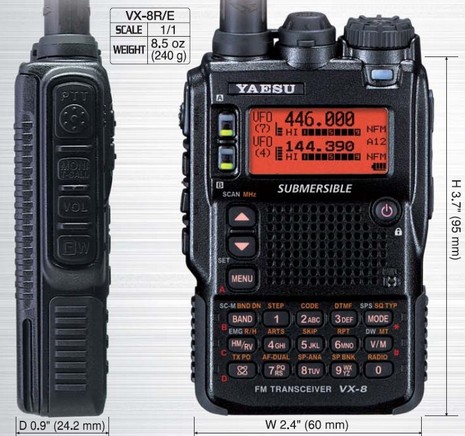
I recently spoke with Standard Horizon VP Jason Kennedy, mostly about the HX850s cracked case issue which I commented on today (and which has become a Sailing Anarchy thread). But we also discussed the future of GPS/VHF handhelds, a future that’s especially rosy as the HX850s is selling well beyond Standard’s projections. When I asked what’s possible, Jason suggested that I check out the Yaesu VX-8R, a new amateur radio handheld which comes from a sister division. I did look at the brochures and manual available at that Yaesu site and, while the button labels above suggest what a complex beast this HAM set is, the obvious potential for a related marine VHF product is…wow…

Continue Reading

Grinch alert, fake life raft & EPIRB releases!

Dec 29, 2008

Hammer-hydrostatic-release_conterfeit

One reason that this holiday season seems a little gray was finding out that some bastards decided to make a few dollars by counterfeiting the Hammar H20 hydrostatic releases used on many ships to automatically deploy life rafts and EPIRBs in a desperate situation. And apparently they did a good enough job with the details to fool most users, but did not bother to make the things so that they’d actually work. Here’s the Safety Alert PDF, some useful commentary from the RYA, and a little black humor from the pros on the gCaptain forum. I am not a “Bah, humbug!” sort of guy, but I would be unmerciful with the creeps—so far uncaught—who put these fakes onto the oceans.

Panbo holiday good wishes, from Brooklyn

Dec 25, 2008

Panbo_Christmas_from_Brooklyn_lr_cPanbo

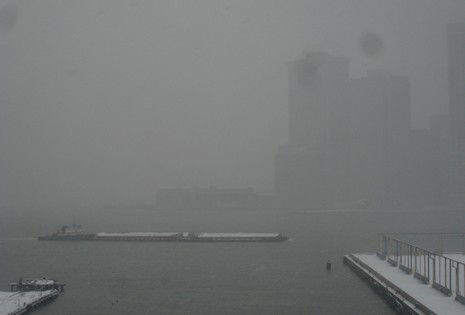
As gray it is, but with pinpoints of light shining through, this image (bigger here) says Christmas season 2008 for me. It’s a slice of the view from near my borrowed apartment during last Friday’s snow storm. Sometimes even the massive buildings of lower Manhattan, the Statue of Liberty (way to the left), and the Brooklyn Bridge (way to the right) were invisible. But I’ve learned enough from AIS and VHF monitoring to know that New York Harbor goes about its essential duties regardless: the oil (barges) come in, the garbage (barges) go out, and the people (ferries) go round and round ;-)
   Later today, my wonderful wife comes down from Maine, along with my mail (including this year’s famous Echopilot Christmas card). All’s well here in New York, as I hope it is with you and yours where ever you are.

Broadband Radar, more details

Dec 23, 2008

Navico_Broadband_Radar_interior

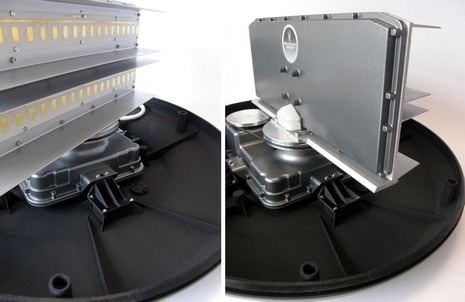
Last week I wrote my March PMY column about Navico’s Broadband Radar and learned some more details in the process. The pricing, for instance, is almost finalized, and sounds decent. The Lowrance version of the BR dome will have a $1,599 MAP (Minimum Advertised Price) while the Northstar and Simrad models—with a few extra features, like MARPA—will cost a few hundred more dollars. However, the unusual solid-state interior hardware seen above, and bigger here, will be same across brands, as will the basic performance, which is sounding quite interesting…

Continue Reading

JDC Seawatch, gift for a fair-haired fool?

Dec 19, 2008

Seawatch_UV_crop_cPanbo

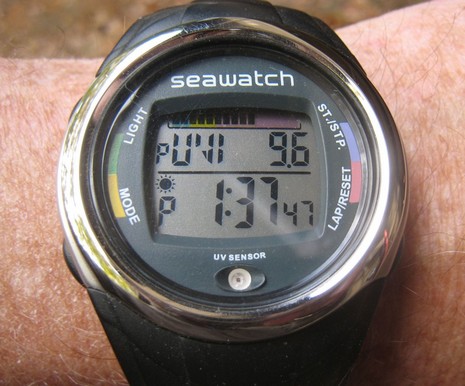
Maybe, like me, you’ve been even lamer than usual about Christmas shopping? And maybe someone on your list is a fair-haired fool who’s lame about proper skin protection, also like me? Well, consider the Seawatch, the first ever with a built-in UV sensor…
Continue Reading

Nauticast B mod, a "silent" mode switch

Dec 18, 2008

DIY_silent_switch_courtesy_Dan_Gingras

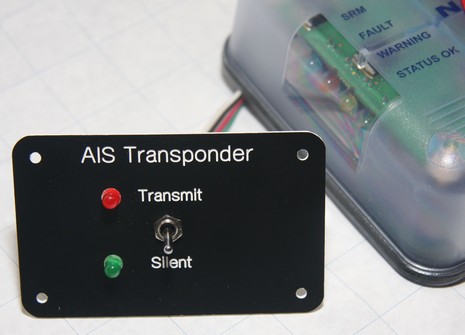
Most Class B AIS units have an SRM/Silent Mode switch on their casing, but the ACR Nauticast B instead provides a wire to a user-supplied switch. The plus is that you can more easily mount the transponder remotely, the minus is that you do have to install a switch, or only use the included software to control the functions. Incidently, that same software (similar to this) lets you choose the switch function: either to go in and out of silent (receive only) mode or to send a SRM (Safety Related Message, so far little used). At any rate, longtime Panbo reader Dan Gingras—a known LED fan—built the handsome Nauticast B switch above, and has kindly shared his design…

Continue Reading

AIS mandates in the USA, the Coast Guard speaketh

Dec 16, 2008

USCG_proposed_AIS_ruling_2008_cPanbo

Just online this morning is the USCG’s latest proposed rulemaking regarding the use of AIS by commercial vessels (and also expansion of the Notice of Arrival and Departure requirements). While the PDF weighs in at 94 pages—and contains some required bureaucratic folderol (that must drive writers nuts)—the suggested regulations make a lot of sense and will significantly improve marine safety, I think. Once refined and enacted—the USCG is hoping for 2010 mandates—the new rules will also be a boon for the manufacturers and installers of Class A or Class B AIS transponders, or both. You see, while the CG has a very specific idea about which formerly-exempt vessels should be made to carry AIS—17,442 more tugs, fishing boats, dredges, passenger vessels and others, to be exact—and endorses Class B technology with vigor, it also recognizes the superior performance of Class A, and is asking all parties involved to help decide which gear should be required on which new classes of mandated vessels…

Continue Reading

Online AIS plotting, free sites & photo obsessions

Dec 15, 2008

VesselTracker_NYC_cPanbo

So far, the best (free) Web AIS coverage I can find for New York Harbor is provided by Vesseltracker.com. Though you have to register to get even a two hour target delay, the site is helping me understand the scene, VHF chatter included, and also illustrates an important point about AIS today. A lot of medium-sized commercial vessels—like all the up-to-150 passenger Water Taxis I see constantly buzzing around lower Manhattan—are not mandated to carry transponders, and don’t. But the U.S. Coast Guard is hot to change those rules, and in fact just issued a draft of the new mandates that I’ll discuss tomorrow. In the meantime. let’s take a closer look at Vesseltracker and its cousins…

Continue Reading

Standard Horizon handhelds, another look

Dec 12, 2008

Standard_Horizon_HX_handhelds_lr_cPanbo

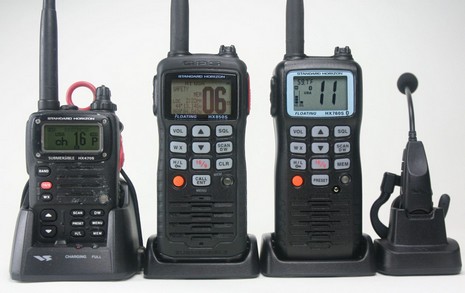
I’ve started monitoring New York Harbor VHF traffic on the Standard Horizon HX850S, first tested last September, and its effective tag and scan functions are helping to sleuth out who works which channels. They’re obviously well established as many callers identify neither themselves nor the intended recipient. Using the handheld reminded me of my HX group portrait above, and bigger here. Among other things, it illustrates some features of the 470 Series (which I’ve happily used for years) that I miss in the 760 and 850: like its compactness, its more secure cradle w/ in-front status LEDs, and its squelch/volume knob instead of the two-step VOL or SQL button then up-down key routine. You can also see the fairly significant difference between the dot matrix screens on the 471 and 850 versus the segmented one on the 760. The photo may emphasize it a bit more than real life, but the segmented technology is higher contrast. On the other hand, the screen designers are really limited by those segments, especially when they try to create less visited screens like setup menus, as seen way below, and bigger here

Continue Reading

Albatross, N2K in a suitcase

Dec 10, 2008

Albatross_N2K_demo_case

Rats! I took some interesting photos of an Albatross demo case similar to this in the lab yesterday, and but somehow they failed to make the trip to NYC with me last night. The company shots will do for now. Albatross Control Systems is a Spanish firm dedicated to all things NMEA 2000. It’s developed a PC server/client monitoring system that’s at least somewhat similar to Maretron’s N2KView, and it distributes all sorts of N2K hardware, much of it relabeled, but also some of its own design. In the latter category—and of much interest to installers and boaters trying to get traditional sensor info onto a 2000 network—are those blue Engine, Battery, and Tank Interface boxes seen above. Albatross makes many such interfaces, as seen in their catalog, and no other company is so ambitious about turning every sort of analog boat signal into an N2K message. But that’s challenging…

Continue Reading

Furuno FA-50 Class B AIS, first impressions

Dec 8, 2008

Furuno_FA-50_cPanbo

I don’t know why Furuno has been quiet about it, but on Nov. 6 the FCC certified its FA-50 Class B AIS transponder (select “AIS” for Equipment Class here). While the product is described at the home site, and is for sale in Europe, it is not yet listed at FurunoUSA. But, as seen above, and bigger here, I’ve been trying one in the lab. And, yes, that is a first-ever-for-transponders Ethernet LAN connection, but there’s a “gotcha” to its use. While you can access the FA-50’s extensive set-up and diagnostic menus with any browser on any computer, you can not get GPS and AIS target info to anything but Furuno NavNet hardware or MaxSea software via Ethernet (also true of the FA-30 receiver, I think). That seems a shame as charting programs like Coastal Explorer and The Capn happily accept Ethernet AIS data (apparently using a format that’s become fairly standardized amongst the Web AIS viewing systems). But the FA-50 does offer conventional NMEA 0183 output, and possibly superior Class B performance…

Continue Reading

Garmin AP, P47 worthy; how about you?

Dec 7, 2008

Garmin_GHC10_waypoint_steer_lr

My December PMY column on Garmin’s GHP 10/GHC 10 autopilot system is now online, and I want to add a couple of illustrations and links. One is the GHC’s go-to-waypoint screen, above and bigger here. When I suggested it might be “slightly too fancy”, I meant in comparison to other fancy yet easy-to-understand graphics seen on the little GHC/GMI screen, like the column’s opening photo, bigger here. In fact this was beta software, and I didn’t get to try the waypoint function on the water; the screen may seem less busy in use, or it may have been changed. I do see an unfamiliar autopilot screen on Garmin’s fancy new marine networking site.

Continue Reading

Arid Bilge, smells better

Dec 4, 2008

 AridBilge n8_mid

This is more than usually peripheral to “marine electronics” but these days everything electrical on boats is coming together, and, besides, I like it! Arid Bilge Systems makes what appear to be vacuum pumps that suck nearly every last drop out of areas that are never completely dried by conventional bilge pumps as well as odd places like compressor pans that can’t be serviced by conventional bilge pumps. I say “apparently” because I can’t find much on that company site about the specific technology (or pricing). But Arid Bilge does do a good job of explaining the many benefits of a truly dry boat, to which I will add my 2 cents…

Continue Reading

Super routers, Istaboa & Tenacious

Dec 3, 2008

Cradlepoint_on_Istaboa

Tip of the beanie to Bob Taylor, who wrote from his Nordhavn 57 Istaboa to enthuse about the Cradlepoint MBR1000 router above, which can handle—even prioritize or load balance—multiple cellular, WiFi, DSL, etc. WAN (Internet) connections coming in via card, USB or Ethernet, and then deliver them to the LAN (PCs, iPod Touchs, etc. around the boat) via WiFi or Ethernet. In the photo Bob’s got an AT&T HSUPA USB Aircard, a Verizon EVDO USB Modem , and a Port Networks MWB-200 WiFi rig (which he heard about here) all connected to it and getting along fine, as he describes in his blog.

Continue Reading

GPS antenna splitting? Yes, but...

Dec 2, 2008

GPS Networking splitter ALDCBS1X2

I was asked about the availability of GPS antenna splitters “to avoid clutter,” and the kindly questioner even threw in a Panbo support donation (thanks, David!). But so far I haven’t found anything that seems practical. While there are many models of GPS Networking brand splitters available, they cost a lot more than the small marine mushroom/disc antennas they would typically replace. As suggested by the label above, though, determining splitter specifications is a lesson in how much you need to know about a specific GPS antenna in order to replace it or split its feed…

Continue Reading

WallyNano, pretty in pink and Tacktick

Dec 1, 2008

WallyNano

Bellissimo, no? Behold the WallyNano, which sports Tacktick_T220_systemLAnot only pink topsides, but all teak decks and smoked glass cabin sides, not to mention push-button hydraulic sheet handling. Tacktick is proud of this beauty as Wally put its Micronet Maxi displays (below) on the mast, controlled with a remote. She also uses Tacktick’s 4’5” high vertical wind wand in order to get more accurate readings, and—just maybe—to go with that pink plumb bow.

Continue Reading