Panbo

October 2008 Archives

HDS, a major Lowrance refresh

Oct 30, 2008

Lowrance_HDS-5_with_Nautic_Insight_Maps

Today Lowrance is announcing a new series of multifunction displays called HDS that I’m excited about seeing at the boat show (and trying when they ship in a few months). The acronym stands for High Definition System, and seems justified on several counts: all the plotter/fishfinders in the series have Lowrance Broadband Sounder technology built in; all have new and more detailed Lake Insight, Nautic Insight or at least an enhanced U.S. basemap built in, and can display every Navionics chart card, including HD Platinum Plus; and all, even the 5” combo model above, can also display Lowrance HD radar, via Ethernet. And there’s more…

Continue Reading

The Wizard, first impressions

Oct 28, 2008

 Wizard_prototype_Oct_cPanbo

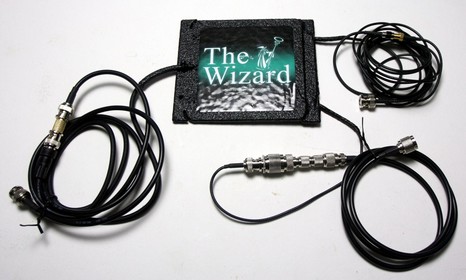
A sample of the intriguing but controversial Wizard antenna arrived yesterday morning and I was able to do some testing before hitting the road for Fort Lauderdale. If I had to put the results in three words they’d be: disappointing but tentative. Before the details, check out the bigger image , which goes along with a more concrete description (that came with the sample) of the marine Wizard’s purported capabilities. That RG-58 cable with a BNC connector coming out of the left side will support a 25 watt VHF radio while the two RG 174U cables on the right (one BNC and one SMA) can purportedly handle AM/FM, WiFi, GPS, Cellular, Sat phones, and UHF/VHF, all transmissions limited to 5 watts. The various added connectors and patch cables are what I had to do to hook the Wizard to VHF and Class B AIS, and the unfortunate lash up at bottom right is one of the reasons I say “tentative.”

Continue Reading

Class B install #2, Digital Yacht bundles

Oct 27, 2008

Digital_Yacht_SPL250_package_cPanbo

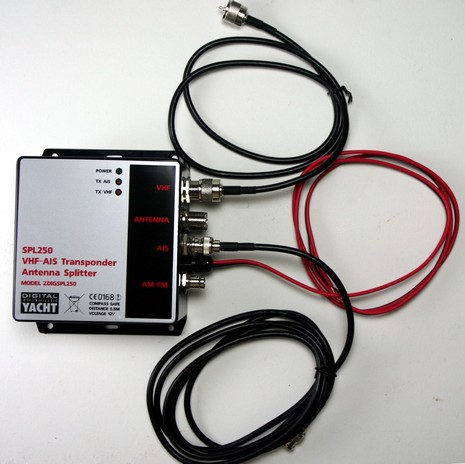
Here’s Digital Yacht’s SPL250 VHF antenna splitter, purportedly the only splitter able to handle 2 watt Class B AIS and regular 25w VHF transceivers without smoke rising from either. (That’s supposedly true even if the splitter loses power, though I haven’t yet dared to test that feature.) It will significantly simplify some Class B installations, particularly here in the States where our VHF antennas and radios typically use PL-259 connectors, while most Class B VHF antenna inputs are BNC. That’s exactly how the SPL250 is set up and it even comes with those PL-259 and BNC patch cables. Check out Tim Flanagan’s Shine Micro AIS-BX install for a lesson on the value of a gadget like the SPL250.

Continue Reading

Lake survey photo essay, thanks Navionics!

Oct 24, 2008

Navionics_survey_data_check_cPanbo

That strange graphic rendered on a laptop in a car trunk stuffed with cold weather clothing represents a terrific experience I had yesterday, and a wicked lot of work. Compare the graphic—which is actually hundreds of thousands of GPS/depth data points—to Lake Megunticook. After a few months and a lot of post processing that data will become a Navionics HD HotMap available on a chart card or for use with easy-on-the-wallet HotMaps Explorer. I don’t yet know how much Navionics will let me write about their specific data collection gear and techniques (Yachting revealed a bit), but here’s what it looks like:

Continue Reading

NMEA new guys #2, Intellian

Oct 22, 2008

Intellian_at_NMEA_cPanbo

You may have seen the full page ads in the boat mags; there’s a new player in the marine satellite TV business, Intellian Technologies, and if nothing else they clearly understand that they must make their case well to make a dent. They certainly didn’t mess around at the NMEA Conference; aside from a booth, they set up a suite with many of their initial seven (7!) products running live. That’s company CEO Eric Sung and U.S. Sales Director John Minetola above, shortly after they showed me some goodies…

Continue Reading

Class B, name game #2

Oct 21, 2008

ProAIS_static_data_screen_cPanbo

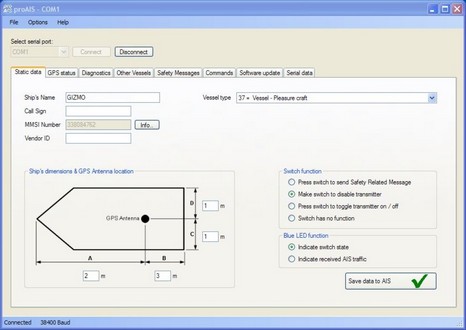
We’re down to Class B AIS details, my friends, and they aren’t hard. Above, and bigger here, is the Static data screen seen in the proAIS software that comes with the European version of Digital Yacht’s AIT250 transponder (and possibly others, as it comes from SRT, the manufacturer of so many Class B circuit boards and finished boxes). In the U.S. market this is the screen an installer would see after he or she had entered the vessel’s MMSI number. Users will see all those data fields grayed out (I presume, as I haven’t actually seen the finished U.S. software). Of course that’s because the FCC barred users from inputing the data themselves. But the user does have to supply accurate info to the installer. Let’s break it down:
Continue Reading

Gigando iPod interface, on Alexis

Oct 20, 2008

Alexis_iPod_interface_cPanbo

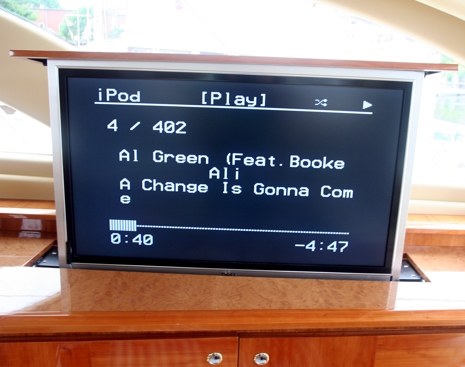
So what do get when a very successful software developer cuts loose on an Azimut 55? Among many other things, the biggest iPod interface I’ve ever seen. I didn’t quite get all the details but I’m pretty sure that Alexis’s super-fine entertainment system includes a Yamaha home theater system, XM Satellite Audio, KVH stabilized HD TV, a Logitech Harmony 1000, and some gizmo that transmits the tunes over an FM channel to whatever nearby radios want to tune in. But my interest in the yacht was mainly its Simrad GB60 system…

Continue Reading

Class B AIS, the name game

Oct 19, 2008

Bullship_Avalon_crop_cPanbo

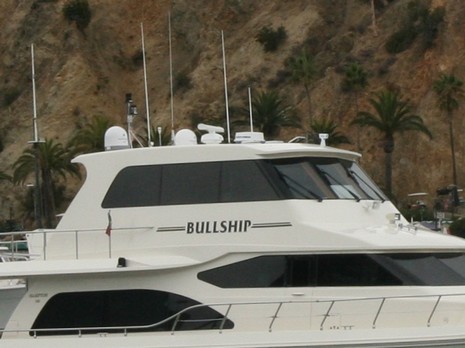
This weekend I’m working on a PMY column about Class B AIS, and now have three transponders up and running, which you’ll hear about. But I also went over my notes and audio recording of the NMEA AIS meeting, and recalled with a smile Jorge Arroyo’s dismay about repetitive and goofy recreational boat names. “We don’t want 250 Rum Runners in our database!” he exclaimed. The very next day I saw Bullship moored above at Catalina Island. The truth is that we can be pretty foolish about boat names, and they are going to look…um…unprofessional on AIS target screens and Web sites…

Continue Reading

SPOT gone mega, and FLIBS

Oct 16, 2008

Sandrine_Spot_cPanbo

Check out the full screen shot for a modern take on the noon position. The world’s largest NMEA 2000 network, i.e. the yacht Sandrine, is experimenting with a Spot Messenger while on passage to Fort Lauderdale. Instead of using Spot’s tracking feature, like Flash of Beauty did, Captain Jay Kimmal (below) is using Spot’s OK message to send an email/text to friends and family every three hours, and the messages are also collected on Sandrine’s share page above. The cost, of course, is trivial on a yacht like this, but Kimmal may have had to put the messenger on deck somewhere to get a consistently functional sky view. Wouldn’t it be nice for boaters if Spot II had a bracket and ports for an external antenna and power feed? 

Continue Reading

Class B installs #1, Brookhouse solution

Oct 15, 2008

Brookhouse AIS B transponder solution

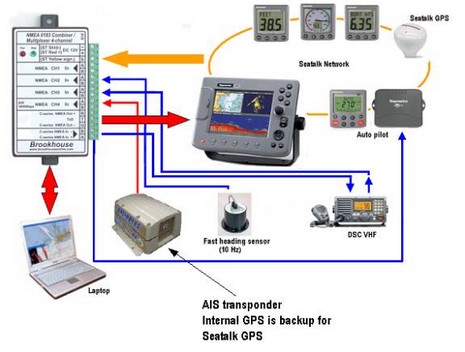
A nice thing about Class B AIS transponders, I think, is that by regulation they include a GPS and thus they deliver “own vessel position” along with AIS target info to whatever displays they feed. But that can present an issue if you’re adding Class B to a system that already has an NMEA 0183 or a SeaTalk GPS attached. Brookhouse seems to have a neat multiplexer solution that makes the new GPS a backup ready to automatically take over if the vessel’s regular GPS fails…

Continue Reading

Maltese Falcon vs Nordic 40, the tonnage rule

Oct 14, 2008

Starboard courtesy Yachting Monthly

AIS is great, but it’s just a tool to help a skipper mind the rules of the road, including the “tonnage rule” being violated above in San Francisco Bay last week. I came across the “Starboard!” story at Yachting Monthly, Peter Lyons’s photo sequence is here, YachtPals has more info on the collision, and this Kiwi site claims that the mighty Maltese Falcon has had to issue the 5 blast danger signal “on far too many occasions” around SF. Oh, and my Sail mate Kimball Livingston was aboard.

Continue Reading

Garmin nüvi 500 & GPSMap 640, yipe!

Oct 14, 2008

Garmin_nuvi_500_marine_screen

How behind is Panbo? Well, in July I whined about Garmin’s introduction of the touchscreen Oregon handheld before I’d yet written much about the somewhat similar Colorado. While I’ve been testing an Oregon for some weeks (and still haven’t posted here about it), Garmin has introduced two new handheld/portable units of considerable interest to boaters. One is the nüvi 500 above, a waterproof, multi-mode version of Garmin’s 3.5” touchscreen automobile navigator. Which makes it a direct, and probably awesome, competitor to the Lowrance XOG and Magellan Crossover. Fortunately, the able blogsters at GPS Magazine and GPSTracklog have both reviewed the unit, though neither went boating with one. I don’t think anyone has yet seen the intriguing GPSMap 640…

Continue Reading

Electronic Marlin teasers, who knew?

Oct 13, 2008

Marlin tackle cPanbo

What can’t be improved with electronics? Hence the battery going up the hind end of the Sevenstrand Electronic Acoustic Lure above. The idea is to attract billfish by simulating the sound (wailing?) of distressed bait fish. And I’m pretty darn sure it works because Greg Stotesbury told me so…

Continue Reading

AIS Class B, really on the map

Oct 9, 2008

Gizmo_Class_B_onthemap_cPanbo

Check the stats! They indicate that at one moment earlier today one particular network of AIS coastal receivers was seeing 763 AIS Class A transponders from towers scattered around the U.S.  And one Class B.  Guess whose 5 meter pleasure (and electronics testing) vessel that was?

Continue Reading

The Wizard, prize-worthy antenna magic?

Oct 8, 2008

The_Wizard_cPanbo

How about a 5” square “multi-band bisynchronous simultaneous reception and transmission ” antenna that doesn’t need to be mast-mounted and can handle frequencies from AM and shortwave through FM and VHF and up into cellular, GPS, sat phones, and WiFi…three radios at once?!? That’s actually just the beginning of what AMT Revolution claims possible of its “Advanced Membrane Transducers.”  

Continue Reading

Navionics Mobile, & other iPhone apps

Oct 7, 2008

Navionics_Mobile_1_cPanbo

It’s come to my attention that not every Panbo reader is obsessed with AIS! So how about a new charting app for the iPhone? That would be Navionics Mobile, which was just introduced at the Genoa Boat Show. It is, in fact, a relative of iNavX, the first iPhone charting app (why reinvent good code?), though obviously different. iNavX can’t download a NOAA raster chart of Genoa, Italy, for instance, and no raster chart can offer a choice of nav aid presentation as illustrated in the split screen shots above and below...

Continue Reading

Navico NAIS-300 Class B, FCC certified!

Oct 7, 2008

Navico_NAIS_B_300_FCC_file_shot

Wow, the Class B AIS story is moving fast. If I’m understanding the FCC Equipment Authorization database correctly (select “AIS” from the “Equipment Class” drop-down list), last Friday Navico added one last submission to its NAIS-300 application—the photo above—and the unit was certified that very day, along with the Simrad AI50. The photo, full size here, not only shows a new warning label that’s apparently acceptable to the FCC (remember, it has changed its mind before), but also a Class B transponder I’ve never seen before. So we have two new questions: can an American buy either of these Navico transponders today, and what the heck is a NAIS-300?

Continue Reading

NMEA new guy, Digital Yacht

Oct 6, 2008

Digital_Yacht_at_NMEA_cPanbo

The one-day product exhibit at the NMEA Conference is never long enough for me, and I hope the manufacturers I missed—often the ones I know the best—took no offense (you know where to find me!). I put particular focus on companies appearing at NMEA for the first time, like Digital Yacht above. This U.K. firm has been operating in Europe for some time, and is larger and more diversified than even its extensive Web site indicates. For instance, principal Nick Heyes seen above, and bigger here, is also a principal at Marine Electronic Services LTD. At any rate, Digital Yacht is not only setting up a U.S. distribution and service branch, but also introducing an interesting new navigation system called Touch…

Continue Reading

Icom AIS receiver, and more on Class B

Oct 4, 2008

Icom_MXA-5000_cPanbo

What with Class B AIS transponders finally coming to market, a new AIS receiver may seem irrelevant. But it’s from Icom, it seems to be designed and priced right, and I suspect that it will be a winner. The $500 MXA-5000 is a true dual channel receiver—especially important when Class B proliferates—with a built-in antenna splitter, dual outputs (plotter and PC), and the ability to mix GPS input into the AIS target stream. This sample unit had just arrived from Japan but the Icom rep here at the NMEA conference said that it seemed to be very sensitive in initial testing. While Class B transponders are also true dual channel receivers, they will cost significantly more, especially when a separate antenna is figured in. The MXA-5000 will be available in December, and maybe so will Class B…

Continue Reading

Early autopilots, the motivation

Oct 1, 2008

Retro-photoelectricB

Check out this recent entry in Maine Boats, Homes & Harbors great series of retro ads. It dimly reminded me of autopilots on the old fishing boats I spend time around in Gloucester, Mass., back in the late 70’s. Some were still using strange schemes to derive electrical signals from a tradition card-in-fluid compass, like a light shining through a hole in the edge of the card to a series of photo-electric cells arrayed in a circle beneath. The Photo-Electric Pilot didn’t make it to the Internet, but I did come across this amazing bit of related marine electronics history:

Continue Reading