Panbo

June 2008 Archives

Furuno NN3D charts, some issues?
Jun 30, 2008

Furuno_MFD8_Woodshole_raster2_cPanbo

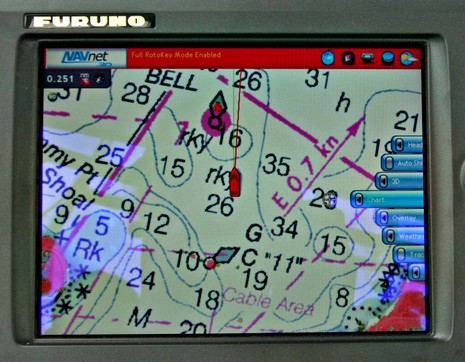
The good news is that more Furuno NavNet 3D MFDs are getting delivered and installed; the bad news is that some of the first users aren’t happy with the charts, neither the rasters nor the vectors. For instance, the two empty MFD12 holes we saw a while back are finally filled, but now the owner—Hull Truth poster “PSW”—is wishing he could use Navionics cards in his MFD12s, as are fellow posters “srmote” and “snowpup”. And I know that our own frequent poster Russ was not pleased with his first look at the charts on his MFD8. My own NN3D experience off Cape Cod did not leave me nearly as negative, but I did note some weaknesses. It helps that I like raster charts and am used to plotting on them, but I didn’t think they worked very well on the 8” display, as suggested in the screen above. Some other levels of zoom/chart scale looked better, and some worse. 3D perspective can put more info on the screen—and fast panning/zooming make it all more tolerable—but there’s just no getting around the fact that you’re looking at a large paper chart through an 8” window. The rasters looked fine to me on the 15” display that was also on the test boat, and I’d guess they’d work OK at 12” (but the Hull Truth gang don’t seem to think so).

Continue Reading

Garmin 18" HD radar, the beam width problem

Jun 27, 2008

Garmin_18HD_1nm_Rockland

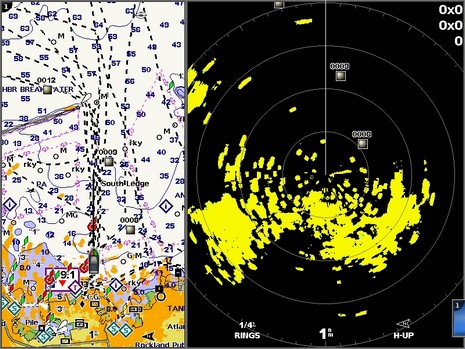
My first time out with the Garmin 18” HD radar was a bit disappointing; Rockland Harbor (try the ‘NOAA’ slider), loaded with bold shore features and boats, seemed overloaded with blotchy targets. It didn’t help that I’d recently been out in another small boat with a Furuno 3.5’ UHD open array that painted targets with astonishing accuracy, even without adjustments. But that’s not a fair comparison (aside from the 4x price difference); the GMR 18” HD, like most any scanner this size, has a 5 degree beam width, while the 3.5’ one has a beam width of 2.3 degrees. I don’t fully understand the transceiver physics, but this ratio of scanner width to target resolution is pretty much immutable in current marine radar technology, and it really makes a difference.

Continue Reading

Garmin N2K, the GPS 17x under-deck mount

Jun 25, 2008

Garmin_17x_underdeck_mount_cPanbo

Today was my second in a week out on Peter Smith’s Banks Cove 22 Slancha, and I’m ever more impressed with Garmin’s NMEA 2000 sensors and its 18" HD radar. Let’s start with the GPS 17x, which now ships with all 4– and 5000 series MFDs, as discussed in March. Peter chose to use the optional under-deck mount, as seen above. It’s way up in the bow of Slancha, and I’d guess that backing plate at left is under the forward starboard pulpit mount, meaning there’s some stainless steel pipe between this sensor and some satellites.

Continue Reading

N2k instruments, in direct sun

Jun 24, 2008

N2K_instruments_full_sun_lr_cPanbo

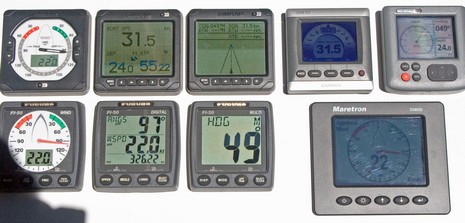
This is the collection of NMEA 2000 instruments I’ve been testing for several months, but here they’re shown in direct sun light (at about 45N latitude, but this afternoon, darn near solstice). Pop up a bigger image of the shot above to see how different they look than when in the shade of a pilot house (or electronics lab). When photographing these screens in controlled lighting I have to turn down the brightness of both the Garmin GMI 10 and the Maretron DSM 250 so they don’t blow out the others, but look what happens here, with everything at maximum brightness (or in the Furuno case, automatic brightness). The transflective Raymarine ST70 is at least on a par with the two other color screens, and the Furuno FI-50s are in a class by themselves, though I think they use the least power of the bunch.

Continue Reading

Mobilarm VPIRB, interesting idea with the wrong acronym?

Jun 23, 2008

Mobilarm_VPIRB

I’ve long thought that handheld VHF DSC can have real value in a MOB situation, which is one reason I’m delighted that the HX850S is shipping and a similar Lowrance model should soon follow.  I also figure that we’ll soon see more Spot-like satellite messenger/GPS/-safety products, and there will be even more confusion about how they work relative to official SARSAT system with it PLBs and EPIRBs (as referenced at the end of the recent FOB entry). But I had no idea until today that Mobilarm was developing a dedicated VHF/DSC/GPS man overboard device, and apparently marketing it as an alternative to a personal EPIRB.
Continue Reading

Maine wackiness, and Garmin HD

Jun 22, 2008

Sharpies_Shack_buck_a_cup_coffee_delivery

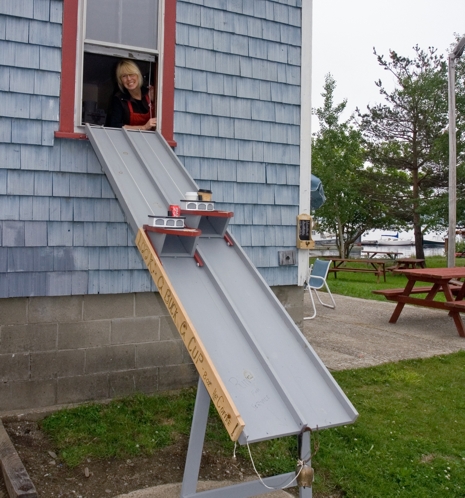
Bet you never saw a rig like this “buck-a-cup” beverage launching ramp!

Continue Reading

Race course problems in China? Call Pyacht!

Jun 20, 2008

Pyacht_racing_marks_in_China_system

I’ve never met Rob Emmet, founder of Pyacht.com, but have come to think of him as quite the can-do gear guy. Apparently the ISAF (International Sailing Federation) Race Management Team thinks so too. Above, and bigger here , is the innovative mark management system that Pyacht developed for a certain major sail racing event—with five tight courses sometimes in use simultaneously—that will take place this August in Qingdao, China (Pyacht is not supposed to use the O name promotionally, so I won’t use it either). Whereas Emmet “couldn't see the Chinese allowing us to use the 900 MHz band to stream NMEA data from the marks,” he settled on VHF DSC. Thus all those Standard Horizon HX-850S handhelds will live in special pouches on the marks, where their GPS position can be polled by those Icom IC-M604 fixed VHFs that will be installed on the committee/signal boats. Then each committee boat, plus the Principal Race Officer and the Media Center (and “Chinese Officials”) all get copies of Nobeltec VNS Max Pro so they can monitor the course layouts. Of course putting all that gear together with proper cabling, battery charging systems, etc. and getting it all approved by the ISAF and Chinese government was pretty complicated. Emmet lays out the whole story well at the Pyacht blog. Even if you don’t give a fig about racing sailboats this is an interesting example of how the new GPS/DSC handheld VHFs can be used to track tenders or whatever. Tip of the propeller beanie to Pyacht!  (Which, by the way, sends out an occasional newsletter, where I learned about this project.) 

Captn Jack's, liquidation?

Jun 19, 2008

Captain_Jack_50

Sign of the times? Or just an indication that the Captn Jack’s portion of Maptech is going to shut its doors? I really don’t know much new about the Maptech sale since my last entry, but there sure are some good deals available at Jack’s, free shipping too. Like the new version of the WxWorx XM Weather receiver (with a modular interface, and I imagine alternate modules can be had from WxWorx), the Last Call VHF speaker/recorder I tested and liked, the iBlue Bluetooth GPS/tracker I tested and bought, the Emtac Bluetooth GPS (which is better built), some interesting looking 12v appliances, and who knows what else. If you have some cash or credit left, that is.

PS:  If you have a weakness for gadgets, for goodness sakes never visit Woot.com, especially on Woot Off! days like today. And don’t even consider downloading the Wootalyzer.

FOB update, SPOT and AIS OK

Jun 18, 2008

SPOT_FOB_Scotland2

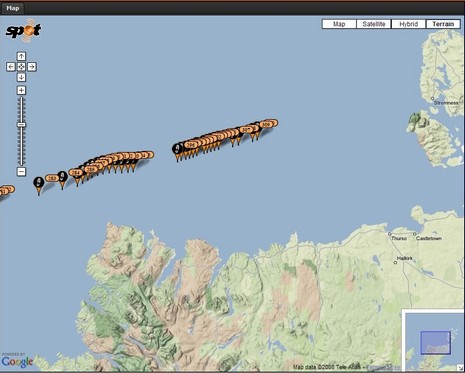
Flash of Beauty sailed from Camden three Wednesdays ago and is now passing over the top of Scotland, as you can see live on its Spot track sharing page. Tom and crew are planning to stop in Stormness, and I bet they can already smell the heather and taste the peaty scotch. Aside from sailing almost 3,000 miles, Tom did manage an underway install of his Simrad Class B AIS, but—whereas FOB took the cool, damp, and seldom-used northern route—wasn’t sure it worked until early this morning:

Continue Reading

Cobra MR F300, a marine Bluetooth cell mic!

Jun 17, 2008

Cobra_MR300_Bluetooth_marine_mic_60d

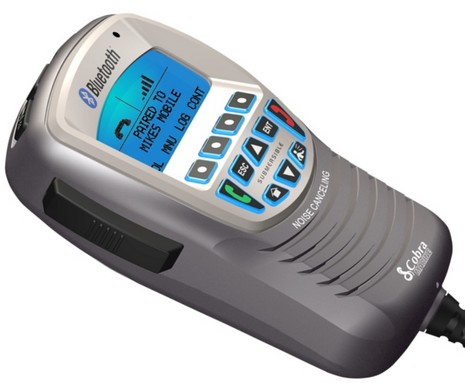
What a good idea! Today Cobra is introducing its MR F300 BT Bluetooth handset, which seems carefully designed to make a cell phone work better, and live longer, on a boat. It’s a waterproof marine-style mic with noise-canceling technology on both the receive and transmit sides. It even has a Push-To-Talk (PTT) button like a VHF mic, but in this case it’s really a reverse mute button. In other words, you and your caller will hear no amplified boat noise unless you push the button (and you’ll still hear your caller even when the button is pushed). But if it’s quiet on the boat, there’s a dedicated button for hands-free speaker phone mode. In fact, the 4.5” tall mic even has soft keys able to call up a 50 number received call log and equal size phone book, and other features like 10 ring tones that can be individually assigned to regular callers {correction due to Cobra Web error, now also corrected: there’s just a choice of 10 tones, not selectable by caller}.

Continue Reading

NN3D in the U.K., and a Furuno USA apology

Jun 15, 2008

Furuno MFD12 in U.K

Seeking the cutting edge of marine electronics—any technology really—can be bitter sweet. On the one hand, for instance, it’s wicked hard right now to actually get your hands on Furuno NavNet 3D equipment here in the States, so hard that Furuno USA just posted a long apology about it. Meanwhile a U.K. Panbo reader and electronics pro has just installed a full suite of NN3D gear, and is exceedingly impressed (as I was after a trip on a Furuno test boat in May):

Continue Reading

Fusion Marine Stereo, an update

Jun 13, 2008

Fusion_road_trip_cPanbo

The July issue of Power & Motoryacht is now online, including my write-up of the new Fusion Marine Stereo, which pretty much summarizes earlier Panbo entries on this innovative system. But recently I got to see the shipping version of the MS-IP500 in the flesh, thanks to a visit by Todd Crocker, above. For many years Todd exercised his marine product creativity and high energy at Standard Horizon, then at Uniden (and is still justifiably proud of its snazzy color 625c fixed VHF), but now he’s a Fusion partner and manager of the U.S. division. He delivered a persuasive demo at my kitchen table!

Continue Reading

Autotether, tests great!

Jun 12, 2008

AutoTether_on_Gizmo_cPanbo

The Autotether wireless engine kill switch system sounded good to me on first Web site read, but, by golly, it’s even better in the flesh. I’ve been testing it for a while now, and can tell you that if that yellow FOB goes underwater or about 50 feet from the base station, the spring loaded plunger lower right will activate nearly instantly, stopping my Honda 40 dead. The white passenger FOB works the same, but just sets off a buzzer, so the driver can u-turn back to the MOB. The base station and FOBs run on AA batteries and the base attaches with sticky-back hook-and-loop tape, so installation is trivial. The manual is a little wordier than needed, but learning to turn the system on and understand the LEDs is pretty easy. The Autotether folks have developed a solid safety product which frankly may my save my dumb butt some day, as Gizmo is an easy boat to fall out of and I rarely used the wired kill switch as it’s so clumsy.

Garmin auto pilot, coming very soon

Jun 11, 2008

Garmin_Krogen44

The Garmin GHP 10 autopilot system, announced back in November, looks like it will make its “third quarter” shipping date. It’s hard to tell in the photo—since the GHC 10 control head is so similar to the GMI 10 instrument—but this new Krogen 44 has been a GHP beta site since March. I happen to know the owner, an experienced and technically astute fellow, and thus know he witnessed the install and then used the pilot all the way from Florida to his Chesapeake home port. He says it works well, and particularly likes “shadow drive”, the system’s ability to go in and out of standby just by “feeling” your desire to steer, or not steer, in the hydraulic line (sensor seen below).

Continue Reading

Standard Horizon Bluetooth, the scheme so far

Jun 9, 2008

Standard_Horizon_HX760S_bundle

When Standard Horizon showed a prototype Bluetooth VHF headset last Fall, they didn’t say which radios it would work with. Now the product scheme has become clear: a new HX760S handheld that comes bundled with the wireless headset, and a BTK-2 kit that can add Bluetoth and the headset to either of its two high-end GX series fixed VHFs. And, by gosh, if you do the Google you’ll find the both the 760 and BTK-2 are actually for sale out there.

Continue Reading

The U.S. AIS B problem, a Shiney smart workaround

Jun 8, 2008

Shine_Micro_Class_B_work_around

Excellent news: Shine Micro has figured out a way to ship its Class B AIS securely locked into silent mode (receive only) so that it’s legal here in the U.S.A., even though the FCC commissioners continue to drag their feet on Class B approval. The idea is that you can install a high quality, true dual-channel AIS receiver now and as soon as the FCC relents you’ll be able to unlock the unit’s transmitter via an online activation scheme. Shine Micro is even sharing some of the “risk” of this proposition, not collecting $200 of the cost until said activation, as explained here.

Continue Reading

N2K fuel transfer control, aka the "Russ Gauge"

Jun 6, 2008

Offshore Systems N2K fuel transfer control

Last week, Offshore Systems announced a new NMEA 2000 Fuel Transfer Control that goes with its existing tank sensors and displays. For those vessels that use a day tank, this control can automatically stop a pump moving fuel from a storage tank if the day tank becomes 95% full. It looks like a well done product, but is particularly cool because Panbo frequent poster Russ Irwin was the customer behind the idea. Russ explains New Morning’s whole fuel scheme here. And I can add some color on the event that inspired Russ to inspire Offshore Systems, which was a transfer-related spill at the same yard where Russ’s sloop is being built. New Morning, incidentally, was launched three weeks ago and, though not yet complete, is looking good. Needless to say, Russ has lots of other electronics on board, not of all which are functioning up to Russ’s expectations, yet. More on that soon. Meanwhile, do note that the Offshore Fuel Transfer system controls the pump directly rather than via NMEA 2000; that makes sense now, as N2K switches and messages are still in development, but one day a control like this will do all its work via the bus (I think).

Saildocs, a Gram Schweikert tutorial

Jun 3, 2008

Grib_for_Panbo_cSchweikert

Saildocs is the baby of West Coast weather guru Jim Corenman, who with the support of SailMail provides a free e-mail server able to feed low bandwidth weather data (and more) to boaters. While not as pretty as the free, but limited Grib.us {or similar PassageWeather}, or the costly but widely used OCENS WeatherNet {or ClearPoint}, it provides a multitude of weather data in many formats right to your in-box for free. All of the Saildocs instructions can be retrieved by e-mail (info@saildocs.com) or from their not-really-meant-for-surfing Web site.  Below are my brief tips and tricks to using Saildocs:

Continue Reading

AIO PNDs, and writing

Jun 2, 2008

AIO_PNDs_in_Camden_cPanbo

If Mae West were alive, her famously bawdy trademark line might go like this: "Hello there, sailor. Is that a WAAS GPS AIO PND loaded with a continent's worth of nautical, street, topo, and photo cartography and several hundred thousand POIs in your pocket...or are you just happy to see me?" To which a sorry geek like me might squeak back, "Pardon, Ms. West, no time for flirting; I've got gadgets to fiddle with!" Indeed I do.

So goes the opening paragraph of my current PMY column, Pocket Navigation, and I’m hoping it will make you chuckle, and read on. Plus you might enjoy a high res version of the alternate lead photo above, and looking back at first Panbo impressions of the Garmin Colorado 400C, the Magellan Crossover, the Lowrance XOG, and the DeLorme PN-20.

Continue Reading