

Boston ferries collide, lack of AIS?
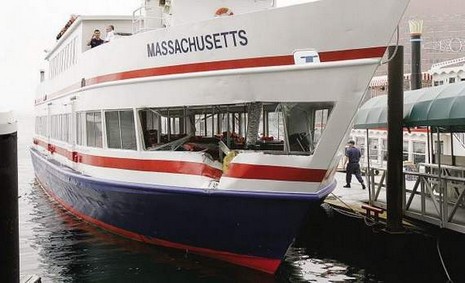
Interesting that an intrepid Boston Globe reporter figured out that AIS transponders might have prevented two Boston ferries from hitting each other in thick fog yesterday morning. This is the sort of thing that promotes public awareness of a valuable safety technology, and perhaps will encourage the FCC, USCG, etc. to move expeditiously on approving Class B and mandating its use on such vessels (or argue that Class A is worth the cost). On the other hand, operator error can not be ignored. Heck, these two boats both work for the MBTA. Wouldn’t you think that they’d know where each other was and be in VHF contact? Not that we all aren’t capable of mistakes. I’ve often thought that running ferries must be a particularly hard gig as the tendency to get lax must be major. (Thanks for the head’s up to Doran, who can, on a good day, float you over bustling Boston Harbor.)



More basic to the discussion about electronics that might have prevented the collision should be the following of the 72 ColRegs (Rules of the Road.)
Yeah, I was surprised that more Ferry boats didn’t have AIS considering the Tonage, Passengers, etc. In fog I passed two Ferry Boats crossing Long island sound going back and forth from Port Jefferson to Bridgeport. Not small at all, and at there speed certainly worth of Class A AIS.
Funny thing is nearly all of the Ferry boats in New York had AIS, explain that?? Is it just do to the Big traffic??
Oh I almost forgot, a funny is there are some double ended ferry boats in New York. So when going backwards you would see the AIS arrow shape going backwards at 15+ knots.
I’m putting a links page together for my blog on Maritime accidents and came across you site. You might be interested in the Case of the Wandering Monarch podcast and transcript at maritimeaccident.wordpress.com
Regards
Bob Couttie
No AIS on long island sound ferry’s?
Is AIS used much in long island sound ?
AIS is used extensively on LIS, most tugs, larger yachts and the party boats broadcast. A glaring omission are the cross Sound ferries which do not. Not only are they AIS-less, getting them to answer a call on 16 (or 13) is like pulling teeth. Having said that, I must also say that they have never failed to alter for me, a sailing vessel, when the situation calls for it.
It is now some 18 months on, has the local authority regulated the requirement for ferries to have AIS?
Ian
It has been a long time since the ferry incident happened in Boston. Are the ferries still running there without the required safety measure i.e. AIS under such circumstances?
The process of mandating more U.S. commercial vessels to carry AIS is underway right now. Here’s my entry on the subject:
https://panbo.com/archives/2008/12/ais_mandates_in_the_usa_the_coast_guard_speaketh.html
And here’s a link directly to the government site where public comments on the new ruling are collected:
http://www.regulations.gov/fdmspublic/component/main?main=DocketDetail&d=USCG-2005-21869
I have not read them all, by any means, but it seems like the industry is generally for AIS but there are some issues with the new Notice of Arrival (NOA) rules.
Read them. “Costs too much.” “Reveals my secret fishing hole.” “No terrorists here.” There are few positive responses, as expected. Most are short sighted and exclusively self-serving.
Its easy to comment from your link Ben. More of us should point out the merits of extending AIS to more commercial vessels, that the benefits more than compensate for the slight cost of AIS.
The Port Jefferson ferries on Long Island Sound are now broadcasting AIS for the first time! Seeing them on the chart plotter and radar screen at night is very helpful.
There is no local authority that mandates AIS usage in Boston, and thus all of the 100GT or less passenger vessels are not equipped. The only AIS ferries in Boston are equipped because they were chartered for the winter to an area that mandates AIS usage. For now tugs and vessels over 100 GT are required to have AIS in Boston. As for the accident, there was radio and radar contact between both vessels, one vessel decided to change direction after making a passing agreement. The more severely damaged of the boats was proceeding at less than 5kts of speed with lookouts posted, the other vessel was coming up to speed and did not have adequate lookouts.
There is very little mention of radar here. Radar works when it is used properly to avoid collisions.