
The magnetic compass, yay or nay?
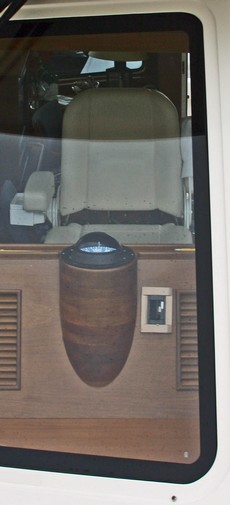 At right is a aft-looking view of the Eastbay helm I visited last week. You can see some serious wood work that puts the steering compass right where you’d want it. The problem is that this compass performs poorly; apparently its deviation error varies with the status of various electronics and is therefore not correctable. I hear this story all the time. And the second part of the story is like most: the owner doesn’t much care, as he’s content with the COG and heading readings he gets from his GPS and the electronic compass in his autopilot. In fact, of the 4 new J-100s launched in my harbor this summer (there’s a sailboat model on fire!), only one has a magnetic compass (but all have 12” multifunction displays!). That really surprised me as sailors tend to be the most compass obsessed of boaters. What’s going on? Is the traditional compass going the way of the paper chart? Is there one on your boat? Is it adjusted properly? Do you use it? I’d appreciate your thoughts.
It happened that a very experienced compass adjuster I know stopped by yesterday. He told me that the compass above is a poor quality Danforth, and that a similarly sized Ritchie SS-2000 would likely do a better job. I’m hoping to tag along with Jeff on an adjustment job, and learn more about how to make a magnetic compass work well around a modern helm full of electro-magnetic forces.
By the way, the odd little frame next to the compass above is a serial port so that routes and waypoints can be uploaded into the Northstar 6000i’s via NMEA 0183.
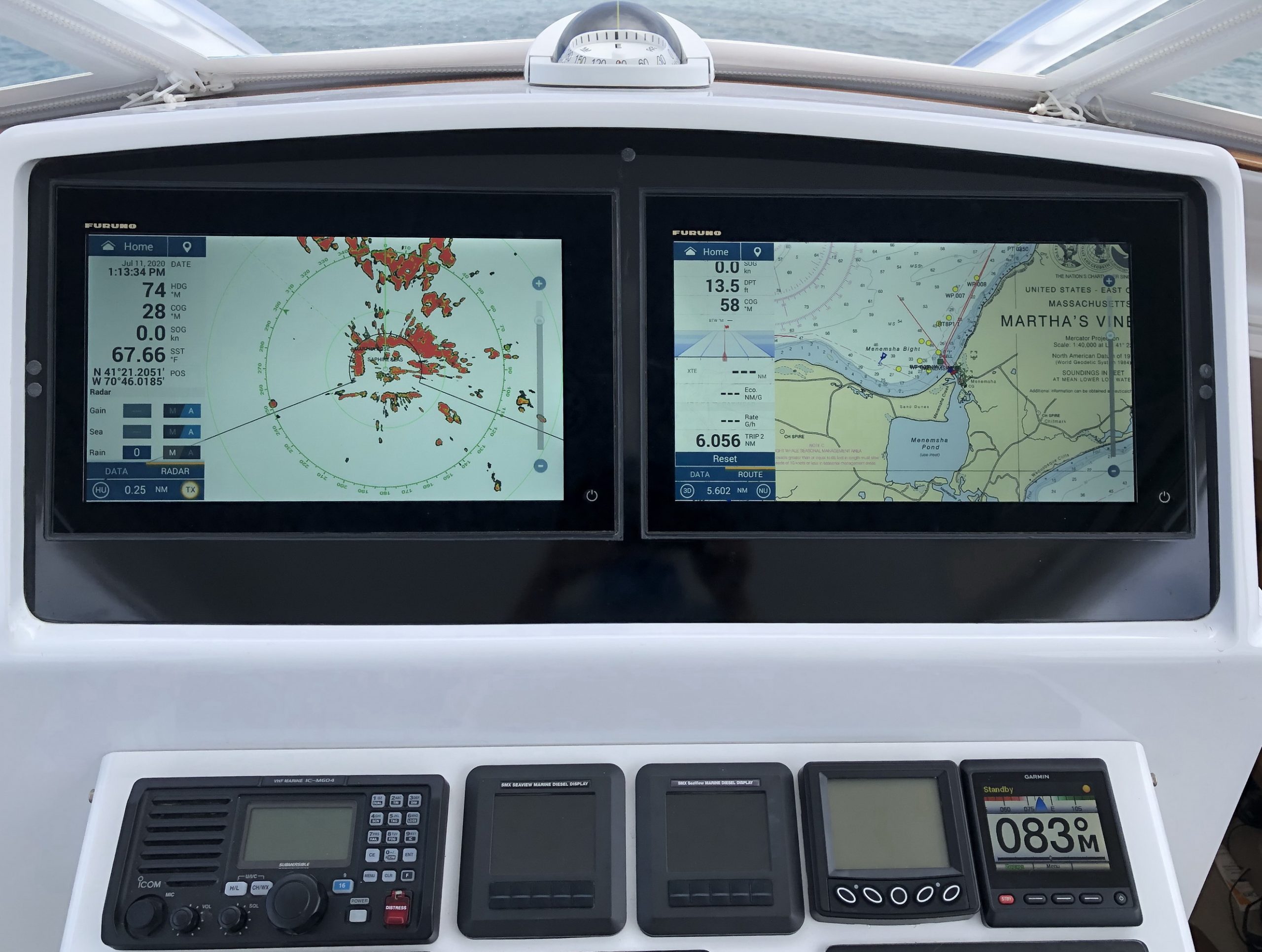



For around the cans racing it seems that going with just a tactical digital compass is enough. The one offered by Taktick is quite popular, and I must say that it is great. That said, I have always had problems relying soley on a digital compass or COG data from a gps when I have been stuck in the fog. The update rate is never fast enough to keep a straight course. A few years back I thought I could go without a compass on my fishing skiff, and just rely on the chartplotter that I have onboard. One night I was out fishing with some friends off of Kennebunkport when the fog came in particularly thick. Without anything to look at I found it impossible to hold a bearing. I actually did a few complete circles on the trip back. The addition of a compass has eliminated that problem.
I’d like to recommend the guide offered by ritchienavigation:
http://www.ritchienavigation.com/optimize/index.jsp