
Panbo News and Reviews

12

ABYC publishes updated battery and electrical standards

ABYC published updates to their E-11 and E-13 standards. E-11 covers the basic requirements for AC and DC systems on a boat. E-11 is a mature standard and the revisions reflect that maturity. This is the first revision of ABYC’s E-13 lithium ion battery standards. The first publication of E-13 incorporated most of ABYC’s technical note TE-13 that previously provided recommendations for the installation of lithium batteries on a boat. Hence, the updates to E-13 are more extensive.

13

Victron NG Smart LiFePO4 batteries, ultimate power flexibility

If you made a list of all the features you require and prefer in your boat’s batteries, I would bet that Victron’s NG Smart batteries would check just about every item on your list. In a field where it sometimes feels like we are all field testing products, Victron’s batteries, BMSes, and software evidence maturity and integration most other manufacturers can only dream of achieving. About the harshest thing I can say about Smart NG batteries is that they’re more expensive than some of the other batteries out there. But, stick with me and we’ll take a careful look at what you get for that extra expense.

8

ABYC Examines the 48-volt boat

The past several years at IBEX, Metstrade and other trade shows, we’ve seen the introduction of electric devices — grills, bow thrusters, trolling motors, air conditioners and such — powered at 48 volts DC. In 2018, Integrel Solutions won a DAME Design Award for its 48-volt alternator. In 2022, Mercury Marine won a Consumer Electronics Show innovation award for its Verado V-12 outboards incorporating a 48-volt alternator. At the 2024 Annapolis Sailboat Show, six of the 16 new boats entered in Cruising World’s Boat of the Year contest had 48-volt house systems. 

7

Attwood Powerbase antenna and light mount, solving problems simply

Panbo covers a lot of high technology, complex products. Often that coverage runs thousands of words to explain the technology. Attwood’s Powerbase isn’t that kind of product. Put simply, this is an electrically actuated antenna mount that raises and lowers your antenna or running light at the touch of a button. It does one thing and it does it well.

4

Simrad NSS 4, preliminary on the water testing

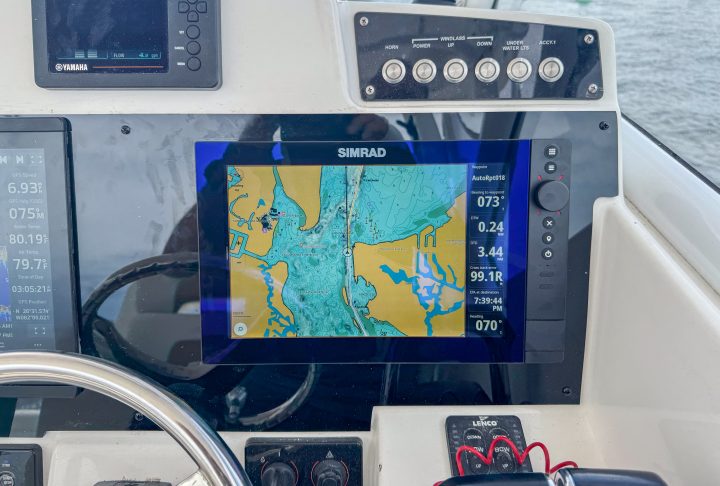
Simrad’s NSS 4 (and Navico stablemate B and G Zeus SR) is the second major installment in Navico’s march towards their new Neon Android based operating system and C-Map X series charts. NSX, the first Navico MFD with Neon showed very well at launch. I am a fan of the visual presentation, new charts, and overall look and feel of the new operating system. So, I’ve anxiously awaited Neon making its way to the rest of Navico’s line. NSS 4 sits atop Simrad’s line and serves as an indication that Navico sees Neon as ready to tackle the biggest of their installs. Now to find out if NSS 4 and Neon back up that belief.

6

WIF-Pro’s water in fuel monitors, keeping a watch on your fuel

WIF-Pro is my favorite kind of company to cover, a relatively new startup with a fresh take on an old problem. I first learned about and met WIF-Pro’s founder, Brian Benedict, at IBEX 2023. Brian, a mortgage banker by day and water in fuel alerter by night, founded WIF-Pro because of his own experience with water in his outboard engine’s fuel filters. Many, fuel filtration systems make it difficult or impossible to know when the filter is full of fuel and when it’s full of water. Even filters that employ a clear bowl are generally mounted in a location that makes checking them regularly difficult. So, more often than not, we first become aware of a watery problem when our engines either sputter or die altogether. WIF-Pro looks to change that with proactive monitoring of water in your boat’s fuel system.

3

Getting Technical: Getting it together

When new classes of technology are introduced to the marine marketplace, they tend to focus on core functionality. Niceties like integrating with the rest of the boat’s control systems are not a priority. Hence, new technology and systems are frequently introduced with dedicated control systems. One result is that helms and control panels are littered with disparate controls, making real estate at the helm a hot commodity.

1

Lenco Pro Control, effective and affordable trim and roll control

What do you call a system that mounts on the stern of your (generally planing) boat hull that influences how the boat rides through the water? For decades, a default answer of trim tabs described just about all such systems. But not any more. Now, we have systems with traditional tabs, vertical intercepters, and at least one system that fits none of our definitions. One company calls their system a vessel attitude control system or VACS for short. Hmm, maybe that’s what we should call these systems? Wait, no, that won’t work, they’ve trade marked it. So, what are we going to call them? My current best option is pitch and roll control devices or PARCD for short. It’s a mouthful, but at least it describes the function of these systems. So, with that out of the way, let’s take a look at Lenco’s Pro Control.