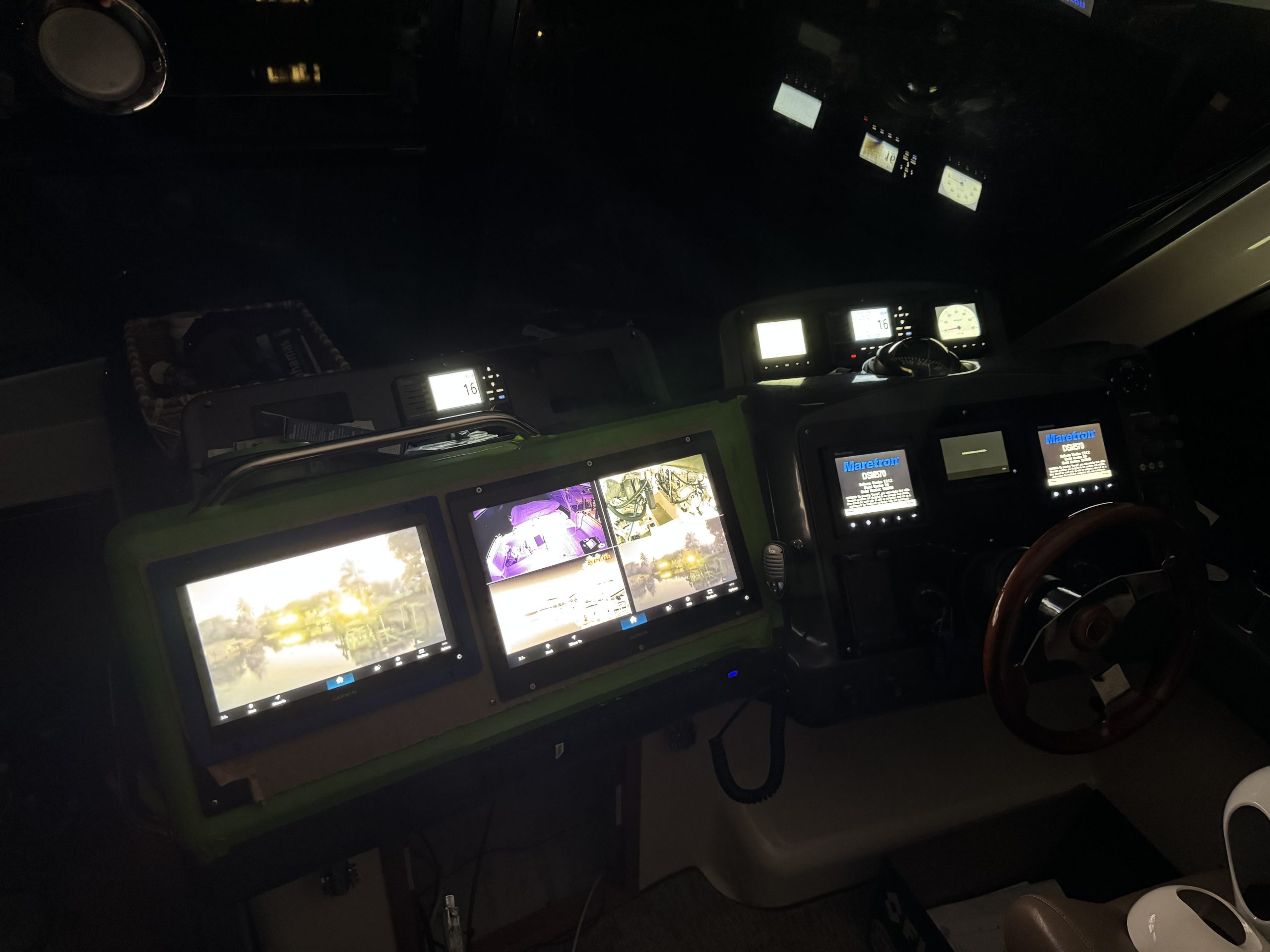
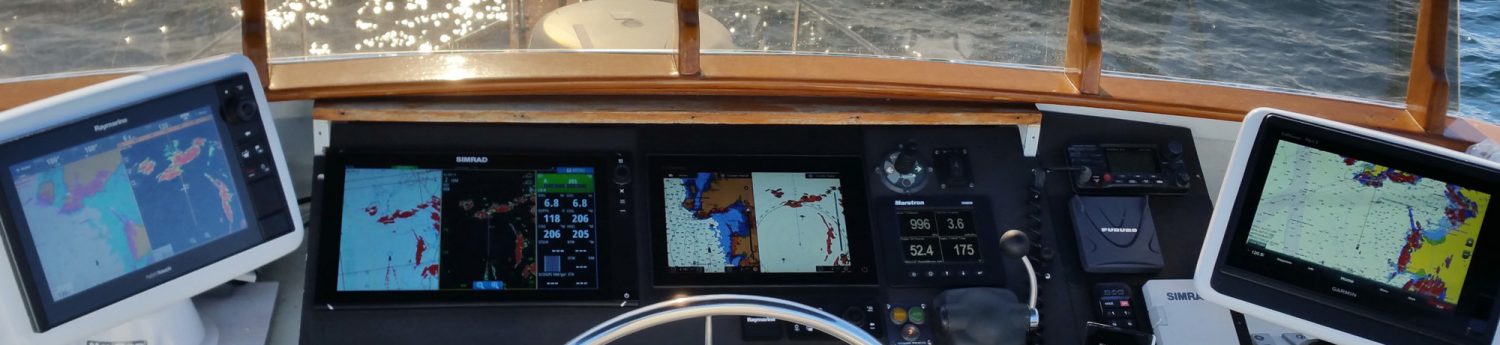
Here's one way to test a newly installed KEP Marine Glass Bridge Monitor, supposedly the first with dual touch technology (which happens to work well with Windows 7). The owner of this J160 racer/cruiser was purportedly very happy with it last season, but there was, in fact, a problem getting the touchscreen signals to consistently make the 25 foot trip from the helm to the nav station PC below. Adam White (left) -- former electronics guy and now service manager at Yankee Marina & Boatyard -- worked with KEP to solve the issue...
It's a beautiful data graphic even as a static screenshot, but you must check out Hint.fm's live Wind Map. Is it just me or is Wind Map the best presentation of macro wind direction and speed ever? It let me almost feel what that big low over the upper Midwest was doing yesterday, and if I was teaching weather I'll bet this is a live graphic that would help students truly get it. And while the two talents behind Hint.fm may characterize Wind Map as "a personal art project" I can't help but wonder how this presentation style and data source might benefit boaters...
The first day of AC 45 racing in Naples yesterday made for must-see YouTube video, and must have been quite an initiation for the six new Mark/VIP boats. For instance, did the Volvo Penta IPS dynamic positioning I saw being tested in San Diego on hull #1 actually work in these very rough conditions? I'm also curious why there seem to be so few "VIP" spectators on board as the mark boats seem like a sensational spot to watch the racing. Yesterday I thought it might be for safety reasons, but today the conditions I saw on the live feed were much more mellow...
EEL purportedly stands for Easily Engaged Locking system but perhaps more to the point are the strong and sleek eel-like jaws of Marinco's new shorepower connector. It's designed to work with existing screw-on-ring inlets -- like Marinco's own 30 and 50 amp models -- except that now you can easily and quickly make the connection with one hand. The EEL even has a built-in LED light for orienting the blades, but just grabbing the jaws tends to orient the plug correctly anyway, so hooking up is just a matter of a little twist and then letting the jaws grab the inlet threads. There's also a secondary lock though the product manager at Marinco's Miami press conference suggested that it was more about peace of mind than necessity. Those jaws are apparently moray eel strong, but is the EEL a sufficient response to the Smart Plug challenge?...
It's an unusual app that gets a press conference and main stream media attention, and Whale Alert certainly deserves it. It's not just that this app might actually save the lives of some rare right whales -- which would be wonderful -- but it also demonstrates how mobile devices can be a critical integration tool between mariners and various governmental and nonprofit agencies, and between even a big ship's conservative electronics and the dynamic world of app development...
When I wrote about Icom's "New Look" VHF radios after Miami I also mentioned a new and "affordable" black box navigation system that impressed me for its rugged-looking build. Well, let's say hello to Icom MarineCommander. While I think that there are still many details to learn about -- online manuals and spec sheets will help -- a lot about MarineCommander is becoming clear, and, besides, I obtained some high res images that nicely complement what's on that Icom site...
That's New Zealand's fascinating Fiordland coast and while I'm not positive the photo was taken from a helicopter, I do know that the solar-powered navigation light in the foreground is serviced by one. Which is how the technicians who recently added an AIS transponder to the site got there too. But you won't see the nav light on an AIS plotting screen because the transponder is programmed to mark a dangerous submerged rock at the mouth of Doubtful Sound 3.4 miles in the distance. Now the visiting cruise ships report that they can now plot Tarapunga Rock from 10 miles offshore or from two miles inside the Sound. The concept is called a Virtual Aid to Navigation, or VAtoN, and while it's the first I know detail of, I'm doubtful that it will be the last...
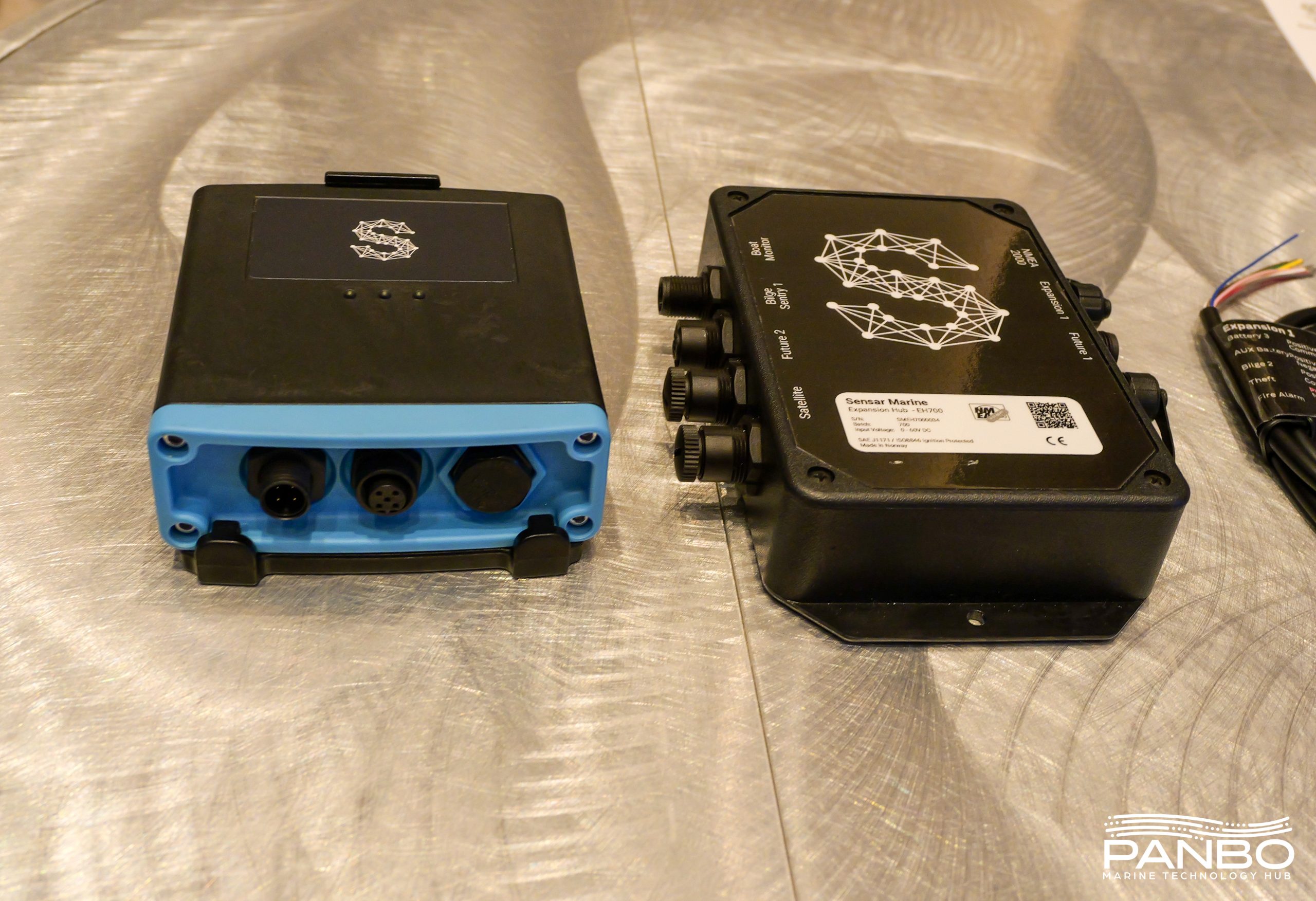
When we argued recently about how much NMEA 2000 rules inhibit hardware innovation, one success story I thought of was Offshore Systems (UK) Ltd, which developed an interesting N2K solid state tank sensor I first wrote about in 2005. Some 4,000 installations of the 3271 Volumetric Fuel Sender still doesn't make Offshore a large company, but founder Bruce Coward has continued to create innovative N2K hardware, all of which is both NMEA and CE certified. The photo above shows a few such items seen at IBEX...
It's hard to beat this chap's description of what it must be like to arrive somewhere aboard the 390-foot motor yacht A:
You could hear the sound of penises shrinking from as far away as San Remo when "A" dropped anchor in the bay of Cannes recently. You could hear the sound of Billionaire's accountants calculating the cost of building a more spectacular boat about thirty seconds later.
I was pleased to get an email from NOAA this weekend reminding me to renew the registration of the ACR AquaLink View PLB I first tested in 2010. I'm especially aware of how important it is to keep distress beacon info up to date because in Miami I got to visit the USCG District 7 SAR Command Center and meet the folks who tend to 44% of all CG EPIRB/PLB activations. And since ACR nicely gave all the attendees a new ResQLink+ to test, I registered that too. As the photo shows, ACR makes it easy by providing the NOAA form with the beacon specifics already filled in and even a postage paid envelope (and ditto for the warranty), but I went online...